Introduction
Artificial Intelligence (AI) has become a driving force in revolutionizing industries, offering innovative solutions and transforming traditional practices. This article explores key AI use cases and applications in major industries, focusing on its impact in e-commerce, finance, healthcare, and risk management.
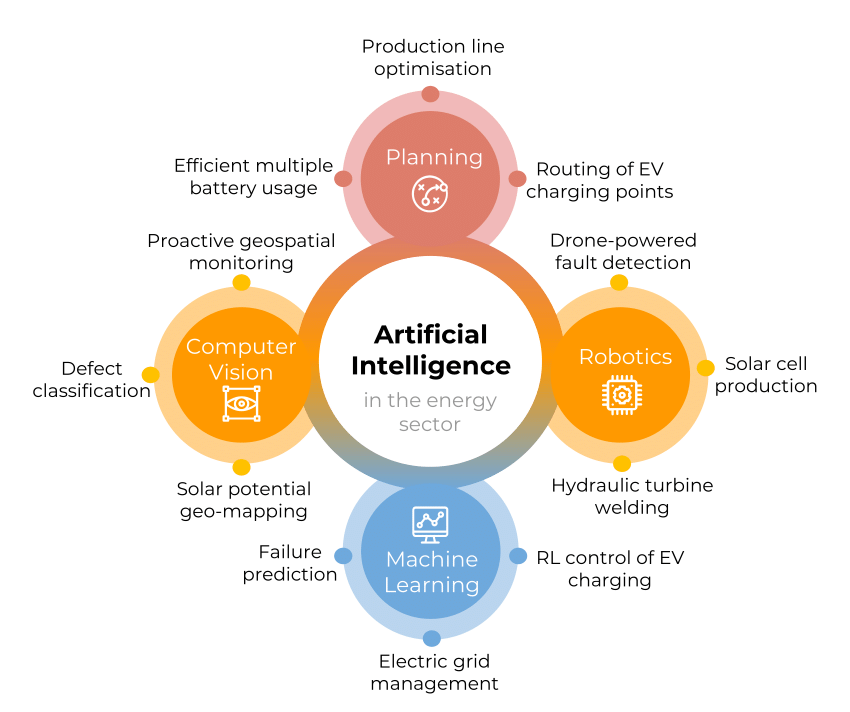
AI Use cases in various industries are mentioned below
I. AI Use Cases in E-commerce
- Personalized Shopping Experience
AI in E-commerce help analyze customer behavior, preferences, and purchase history to offer personalized product recommendations. E-commerce platforms utilize machine learning to enhance user experience, increasing customer satisfaction and driving sales. Recommendation engines powered by AI algorithms are integral in creating a tailored shopping journey for each user.
- Chatbots for Customer Support
AI chatbots have become essential in e-commerce for providing instant and efficient customer support. These virtual assistants use natural language processing to understand and respond to customer queries, helping with product inquiries, order tracking, and issue resolution. This improves customer engagement and streamlines the support process.
- Dynamic Pricing Strategies
E-commerce businesses leverage AI to implement dynamic pricing strategies based on real-time market conditions, competitor pricing, and customer demand. Machine learning algorithms analyze vast amounts of data to adjust prices dynamically, optimizing revenue and competitiveness.
II. AI Use Cases in Finance
- Fraud Detection and Prevention
AI in financial compliance is an important tool detecting and preventing fraudulent activities. Machine learning models analyze transaction patterns, identify anomalies, and flag potentially fraudulent transactions in real-time. This proactive approach enhances security and protects both financial institutions and customers.
- Credit Scoring and Risk Management
AI-driven credit scoring models have transformed the lending process in finance. By analyzing diverse data sets, including transaction history and alternative data sources, AI algorithms provide more accurate assessments of an individual’s creditworthiness. This improves risk management and enables better-informed lending decisions.
- Algorithmic Trading
In finance, AI plays a crucial role in algorithmic trading. Machine learning algorithms analyze market trends, news, and historical data to make real-time trading decisions. This enhances the speed and efficiency of trading strategies, optimizing investment portfolios and improving overall performance.
III. AI Use Cases in Healthcare
- Disease Diagnosis and Prediction
AI applications in healthcare are making significant strides in disease diagnosis and prediction. Machine learning algorithms analyze medical data, including imaging, genomics, and patient records, to identify patterns and predict diseases at an early stage. This aids healthcare professionals in making accurate diagnoses and implementing timely interventions.
- Personalized Treatment Plans
AI enables the creation of personalized treatment plans based on individual patient data. Machine learning algorithms analyze patient histories, genetic information, and treatment outcomes to recommend personalized treatment options. This approach improves treatment efficacy and minimizes adverse effects.
- Administrative Workflow Optimization
AI streamlines administrative tasks in healthcare by automating processes such as appointment scheduling, billing, and medical record management. This not only improves efficiency but also reduces the administrative burden on healthcare professionals, allowing them to focus more on patient care.
IV. AI Use Cases in Risk Management
- Credit Risk Assessment
AI is widely used in risk management to assess credit risk in financial transactions. Machine learning models analyze credit histories, financial statements, and economic indicators to evaluate the likelihood of default. This assists financial institutions in making informed lending decisions and managing credit portfolios effectively.
- Supply Chain Risk Management
AI applications help organizations in assessing and mitigating risks in their supply chains. Predictive analytics powered by AI models analyze various factors, such as supplier performance, market conditions, and geopolitical events, to identify potential risks and optimize supply chain strategies.
- Cybersecurity Threat Detection
In the digital age, AI is instrumental in detecting and mitigating cybersecurity threats. Machine learning algorithms analyze network traffic, user behavior, and system vulnerabilities to identify and respond to potential security breaches. This proactive approach enhances cybersecurity and protects organizations from evolving threats.
Conclusion
AI’s transformative impact across major industries is evident in the diverse use cases and applications highlighted in e-commerce, finance, healthcare, and risk management. As technology continues to advance, the collaborative efforts of industries, researchers, and policymakers will be crucial in harnessing the full potential of AI, driving innovation, and addressing ethical considerations for responsible deployment. The continued integration of AI technologies promises to reshape industries, improve efficiency, and enhance the overall quality of products and services across diverse sectors.
 FinTech blogs
Leave a comment