Blockchain technology has become a driving force behind transformative innovations, challenging traditional systems and fostering decentralization. At the heart of this technological revolution are blockchain developers, the architects and visionaries who bring decentralized solutions to life. In this article, we will explore the pivotal role of blockchain developers, the skills they possess, the challenges they face, and the impact they have on industries across the globe.
The Architects of Decentralization: Who Are Blockchain Developers?
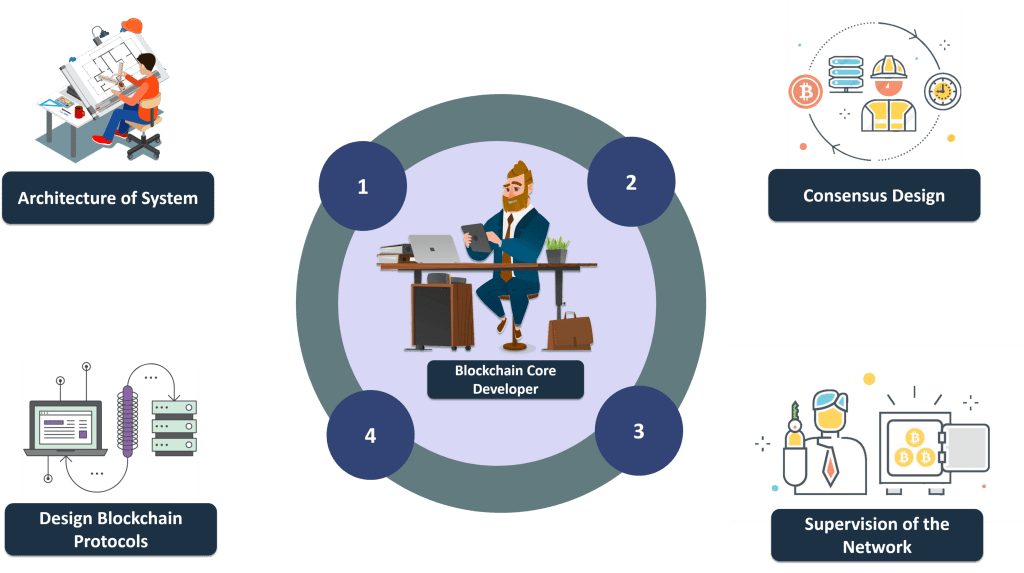
Blockchain developers are skilled professionals responsible for designing, implementing, and maintaining blockchain solutions. They work with various blockchain platforms, including but not limited to Ethereum, Binance Smart Chain, and Hyperledger, creating decentralized applications (DApps) and smart contracts. These developers possess a unique set of skills that combine software development expertise with a deep understanding of cryptographic principles and consensus algorithms.
Key Skills of Blockchain Developers
Solid Programming Skills:
- Proficiency in languages such as Solidity (for Ethereum), Go, or Rust is crucial for coding smart contracts and building blockchain applications.
Understanding of Blockchain Architecture:
- In-depth knowledge of how blockchain networks function, including consensus mechanisms, cryptographic principles, and distributed ledger technology.
Smart Contract Development:
- Expertise in creating self-executing contracts using smart contract languages, ensuring security and efficiency in code execution.
Decentralized Application (DApp) Development:
- Building user-friendly and secure DApps that interact with blockchain networks, often involving frontend development skills.
Security Awareness:
- Due to the immutable nature of blockchain, developers must be highly conscious of security best practices to prevent vulnerabilities and potential exploits.
The Impact of Blockchain Developers on Industries
Finance:
- Blockchain developers play a crucial role in revolutionizing the financial sector by creating decentralized financial platforms, enabling peer-to-peer transactions, and offering programmable money through smart contracts.
Supply Chain:
- By implementing blockchain solutions, developers enhance transparency and traceability in supply chains, reducing fraud and optimizing logistics.
Healthcare:
- Blockchain developers contribute to secure and interoperable healthcare systems, ensuring the integrity of patient data and streamlining information exchange among stakeholders.
Real Estate:
- Tokenization of real estate assets, made possible by blockchain technology, is facilitated by developers, enabling fractional ownership and liquidity in traditionally illiquid markets.
Identity Management:
- Developers work on blockchain-based identity solutions, providing individuals with greater control over their personal data and reducing the risk of identity theft.
Challenges Faced by Blockchain Developers
- Scalability:
- The scalability of blockchain networks remains a significant challenge, with developers seeking solutions to handle increasing transaction volumes efficiently.
- Regulatory Uncertainty:
- Navigating the evolving regulatory landscape poses challenges for developers, who must ensure compliance with legal frameworks.
- Interoperability:
- Achieving seamless interoperability between different blockchain networks is a complex task but is crucial for the broader adoption of decentralized solutions.
- User Adoption:
- Despite the potential benefits, mainstream adoption of blockchain applications faces hurdles, and developers must focus on creating intuitive and user-friendly experiences.
The Future of Blockchain Development: Trends and Innovations
- Cross-Chain Solutions:
- Developers are exploring solutions that allow different blockchain networks to communicate and share data, fostering a more interconnected ecosystem.
- DeFi Innovations:
- The decentralized finance (DeFi) space continues to evolve, with developers creating novel financial instruments, yield farming strategies, and governance mechanisms.
- NFTs and Digital Ownership:
- Non-Fungible Tokens (NFTs) have gained immense popularity, and developers are exploring new applications for digital ownership, ranging from virtual real estate to in-game assets.
The Collaborative Nature of Blockchain Development
Blockchain development often thrives in a collaborative environment, with open-source projects and decentralized communities playing a pivotal role. Developers contribute to shared repositories, collaborate on forums, and engage in hackathons to propel the innovation curve forward.
Conclusion: Pioneering a Decentralized Tomorrow
Blockchain developers are the architects of a decentralized future, influencing industries and reshaping the way we interact with information, assets, and each other. As they continue to tackle challenges, embrace emerging technologies, and push the boundaries of what is possible, the impact of blockchain development will only intensify. The collaborative spirit within the blockchain community, coupled with ongoing advancements, positions blockchain developers as key players in the journey towards a more decentralized and equitable world.
 FinTech blogs
Leave a comment