Introduction:
In the era of big data and machine learning, the ability to represent data in a meaningful and efficient manner is crucial for deriving valuable insights and building effective models. Embeddings, which capture the semantic relationships between data points in a low-dimensional space, have emerged as a powerful tool for data representation. In this article, we delve into the concept of embeddings as a service, exploring how it is revolutionizing the way organizations handle data representation tasks.
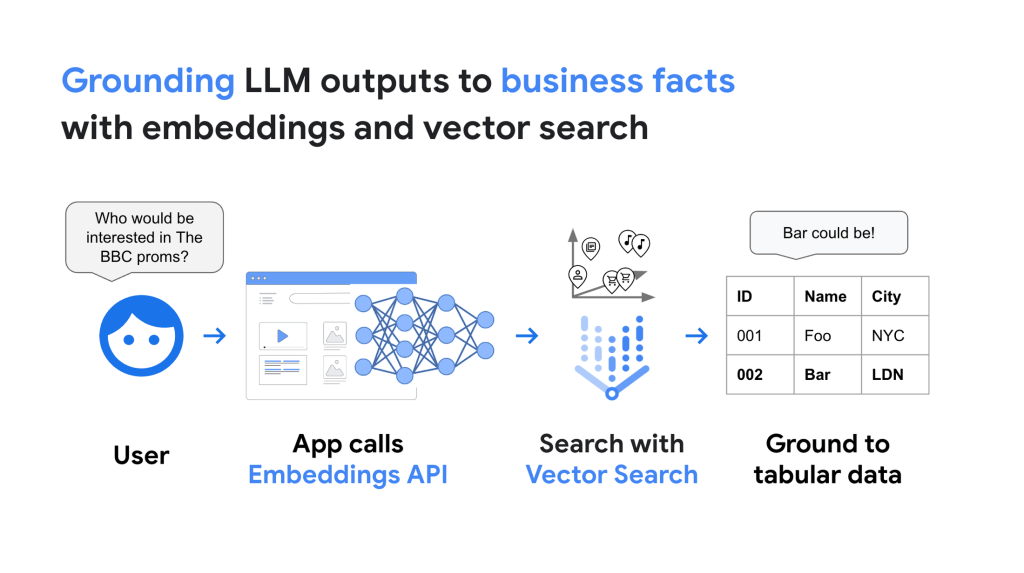
Understanding Embeddings:
Embeddings refer to the process of mapping high-dimensional data into a lower-dimensional space while preserving the inherent structure and relationships within the data. This transformation enables algorithms to capture meaningful patterns and similarities, making it easier to perform tasks such as classification, clustering, and recommendation.
The Role of Embeddings as a Service:
Embeddings as a service (EaaS) providers offer pre-trained embedding models and APIs that allow organizations to leverage the power of embeddings without the need for extensive data preprocessing or model training. These services simplify the process of incorporating embeddings into various applications and workflows, enabling organizations to focus on solving business problems rather than worrying about the intricacies of data representation.
Benefits of Embeddings as a Service:
- Efficiency: EaaS providers offer pre-trained embedding models that can be easily integrated into existing systems, reducing the time and resources required for data representation tasks.
- Scalability: With EaaS, organizations can scale their embedding solutions to handle large volumes of data and accommodate growing business needs.
- Flexibility: EaaS providers offer a range of embedding models tailored to different types of data and use cases, providing organizations with flexibility and choice.
- Accuracy: Pre-trained embedding models are often optimized for accuracy and performance, ensuring reliable results across various applications and domains.
- Cost-Effectiveness: By outsourcing data representation tasks to EaaS providers, organizations can avoid the upfront costs associated with building and maintaining embedding models in-house.
Applications of Embeddings as a Service:
- Natural Language Processing (NLP): EaaS providers offer embedding models trained on large text corpora, enabling organizations to extract semantic information from text data and perform tasks such as sentiment analysis, text classification, and language translation.
- Recommendation Systems: Embedding models are widely used in recommendation systems to represent user preferences and item attributes. EaaS providers offer embedding models optimized for recommendation tasks, allowing organizations to build personalized recommendation engines for e-commerce, media, and other industries.
- Image Recognition: EaaS providers offer embedding models trained on image datasets, enabling organizations to extract meaningful features from images and perform tasks such as object detection, image classification, and image segmentation.
- Time Series Analysis: Embedding models can be applied to time series data to capture temporal patterns and relationships. EaaS providers offer embedding models tailored to time series analysis, allowing organizations to forecast trends, detect anomalies, and make data-driven decisions in domains such as finance, healthcare, and IoT.
Challenges and Considerations:
While embeddings as a service offer numerous benefits, organizations should be mindful of potential challenges and considerations, including:
- Data Privacy and Security: Organizations must ensure that sensitive data is handled securely when using EaaS providers.
- Model Selection: Choosing the right embedding model for a specific use case requires careful consideration of factors such as data type, domain, and task requirements.
- Vendor Lock-In: Organizations should evaluate the long-term implications of relying on a specific EaaS provider and consider factors such as vendor lock-in and migration strategies.
Conclusion:
Embeddings as a service offer a convenient and efficient solution for organizations looking to leverage the power of embeddings for data representation tasks. By providing pre-trained embedding models and APIs, EaaS providers enable organizations to unlock valuable insights from their data and build smarter, more efficient applications. As the demand for data-driven insights continues to grow, embeddings as a service are poised to play a pivotal role in driving innovation and accelerating digital transformation across industries.
 FinTech blogs
Leave a comment