Introduction:
In today’s rapidly evolving digital landscape, enterprises are constantly seeking innovative solutions to drive efficiency, productivity, and competitiveness. Enter Generative AI Architecture, a groundbreaking approach revolutionizing how businesses operate and engage with their customers. In this article, we delve deep into the world of Generative AI Architecture, exploring its significance, components, and transformative potential for enterprises across various industries.
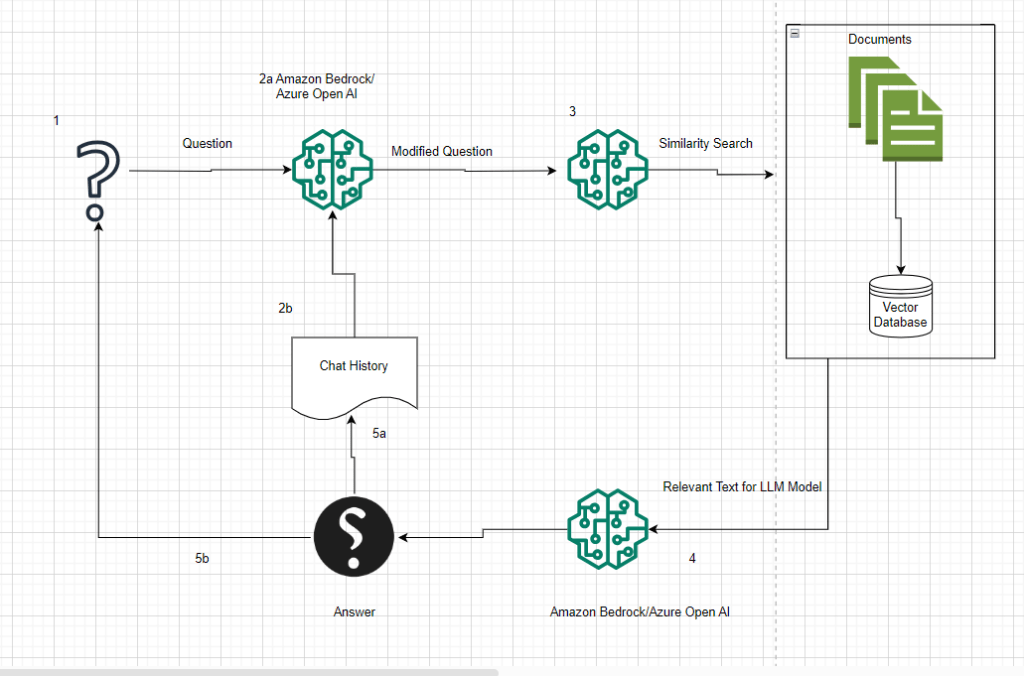
Understanding Generative AI Architecture:
Generative AI Architecture represents a paradigm shift in artificial intelligence, enabling machines to generate content autonomously. At its core, it leverages advanced algorithms, neural networks, and deep learning techniques to understand and mimic human behavior, speech, and creativity. Unlike traditional AI models, which rely on predefined rules and datasets, Generative AI Architecture has the ability to generate new, realistic content that mirrors human-like intelligence.
Components of Generative AI Architecture:
Large Language Models (LLMs):
- LLMs, such as GPT (Generative Pre-trained Transformer), serve as the cornerstone of Generative AI Architecture. These models are pre-trained on vast amounts of text data, enabling them to understand and generate natural language with remarkable accuracy and fluency.
- Enterprises can leverage LLMs to automate various tasks, including content generation, customer service interactions, and data analysis, leading to significant time and cost savings.
Reinforcement Learning:
- Reinforcement learning algorithms play a crucial role in Generative AI Architecture by enabling machines to learn and improve through trial and error.
- Enterprises can employ reinforcement learning to optimize business processes, enhance decision-making, and personalize customer experiences, thereby driving greater efficiency and customer satisfaction.
Attention Mechanisms:
- Attention mechanisms are key components of Generative AI Architecture that enable models to focus on relevant information while generating output.
- By incorporating attention mechanisms into their AI systems, enterprises can improve the accuracy and relevance of generated content, leading to more effective communication and engagement with customers.
Transformative Potential for Enterprises:
Enhanced Customer Engagement:
- Generative AI Architecture enables enterprises to create personalized and engaging experiences for their customers through tailored content generation and interactive applications.
- By understanding customer preferences and behavior, enterprises can deliver targeted recommendations, product suggestions, and marketing campaigns, fostering deeper engagement and loyalty.
Streamlined Operations:
- By automating repetitive tasks and processes, Generative AI Architecture helps enterprises streamline their operations and improve efficiency.
- From automating customer support interactions to optimizing supply chain management, AI-powered solutions enable enterprises to allocate resources more effectively and focus on strategic initiatives.
Data-driven Insights:
- Generative AI Architecture empowers enterprises to derive actionable insights from vast amounts of data, enabling informed decision-making and strategic planning.
- By analyzing customer feedback, market trends, and operational data, enterprises can identify opportunities for growth, mitigate risks, and stay ahead of the competition in dynamic markets.
Challenges and Considerations:
While Generative AI Architecture offers immense potential for enterprise transformation, it also presents certain challenges and considerations that organizations must address:
Ethical and Legal Implications:
- As AI systems become more autonomous and capable of generating content independently, enterprises must consider the ethical and legal implications of their use.
- Issues such as data privacy, bias in AI algorithms, and intellectual property rights require careful consideration and proactive measures to mitigate risks and ensure responsible AI deployment.
Robustness and Reliability:
- Ensuring the robustness and reliability of AI systems is critical to their successful integration into enterprise workflows.
- Enterprises must invest in rigorous testing, validation, and monitoring processes to detect and mitigate potential issues such as model bias, errors in generated content, and system failures.
Conclusion:
Generative AI Architecture represents a transformative force that is reshaping how enterprises operate, innovate, and engage with their customers. By harnessing the power of advanced algorithms, neural networks, and deep learning techniques, organizations can unlock new opportunities for growth, efficiency, and competitiveness. However, to realize the full potential of Generative AI Architecture, enterprises must address challenges related to ethics, reliability, and scalability, while embracing a culture of innovation and continuous learning. As the digital landscape continues to evolve, Generative AI Architecture will undoubtedly play a central role in driving enterprise transformation and shaping the future of business.
 FinTech blogs
Leave a comment