Generative AI has emerged as a game-changer in the realm of artificial intelligence, and one of the most prominent models leading this revolution is the Generative Pre-trained Transformer (GPT). Introduced by a pioneering AI research company, GPT models have opened up new frontiers in Natural Language Processing (NLP), enabling machines to understand, generate, and interact with human language like never before.
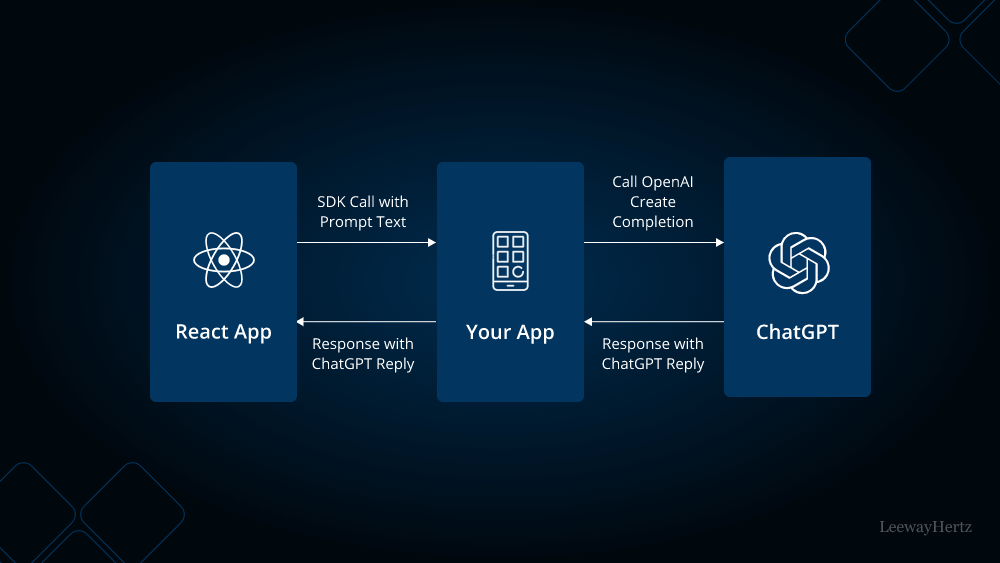
At the core of GPT’s success lies its unique architecture and training approach. Unlike traditional language models designed for specific tasks, GPT models are generative and unsupervised, capable of performing a wide range of NLP tasks with minimal additional training. These models are pre-trained on vast datasets, allowing them to learn language patterns and structures at an unprecedented scale.
The impact of GPT models has been nothing short of transformative. From virtual assistants and chatbots to content generation and language translation, these models have revolutionized how we interact with and leverage technology. The latest iteration, GPT-4, has taken this revolution to new heights, introducing multimodal capabilities that allow it to understand and process images and videos, in addition to text.
Building a GPT Model: A Step-by-Step Guide
While GPT models are complex and computationally intensive, their development process can be broken down into several key steps. Let’s explore these steps in detail:
- Data Preparation: GPT models thrive on vast amounts of data. The first step is to gather and preprocess a massive corpus of text data, which can include books, articles, websites, and other online content. This data needs to be cleaned, tokenized, and formatted for efficient training.
- Model Configuration: Next, you’ll need to define the configuration parameters for your GPT model, such as the number of transformer layers, attention heads, hidden layer sizes, and vocabulary size. These parameters will determine the model’s capacity and performance.
- Model Architecture: Here, you’ll define the architecture of your GPT model using deep learning frameworks like PyTorch or TensorFlow. This typically involves an embedding layer, a stack of transformer blocks, and a final output layer to generate predictions.
- Training: With your data and model architecture in place, it’s time to train the GPT model. This involves feeding the preprocessed data into the model and optimizing its parameters using advanced techniques like gradient descent and backpropagation. Depending on the size of your dataset and model, this process can be computationally intensive and may require specialized hardware like GPUs or TPUs.
- Fine-tuning: While pre-trained GPT models can perform well on a wide range of tasks, fine-tuning them on domain-specific data can further enhance their performance. This involves additional training on a smaller, task-specific dataset, allowing the model to adapt and specialize in a particular domain or application.
- Deployment and Integration: Once trained and fine-tuned, your GPT model can be integrated into various applications and workflows. This may involve developing APIs, creating user interfaces, or embedding the model into existing systems and processes.
Leveraging GPT Models for Business Success
The transformative potential of GPT models extends far beyond academic research or personal assistants. Businesses across industries are increasingly recognizing the value of these models in driving innovation, improving efficiency, and enhancing customer experiences.
In the realm of customer service, GPT-powered chatbots and virtual assistants can provide personalized, human-like interactions, reducing response times and increasing customer satisfaction. These models can understand complex queries, provide relevant information, and even handle multi-turn conversations.
Content creation and marketing is another area where GPT models are making significant inroads. These models can generate high-quality, engaging content for websites, social media, and marketing materials, saving time and resources while ensuring consistency and accuracy.
Additionally, GPT models are proving invaluable in streamlining various business processes, from document summarization and analysis to code generation and task automation. By leveraging these models, businesses can improve efficiency, reduce errors, and free up valuable human resources for more strategic and creative endeavors.
Challenges and Considerations
While the potential of GPT models is undeniable, their widespread adoption and successful implementation require addressing several challenges and considerations.
One of the primary concerns is the issue of bias and toxicity. As GPT models are trained on vast datasets from the internet, they may inadvertently learn and perpetuate biases and toxic language present in those datasets. Addressing this challenge requires careful data curation, bias mitigation techniques, and robust monitoring systems.
Another challenge is the phenomenon of “hallucination,” where GPT models can generate convincing but factually inaccurate statements. This can undermine the reliability and trustworthiness of the model’s outputs, particularly in sensitive or high-stakes applications. Techniques such as adversarial training, improved model architectures, and human evaluation can help mitigate this issue.
Data privacy and security are also critical considerations when integrating GPT models into business operations. These models can inadvertently memorize and reproduce sensitive information from their training data, posing potential risks for data leaks or privacy breaches. Establishing robust policies and safeguards is essential to prevent such incidents.
Conclusion
The advent of GPT models represents a significant milestone in the evolution of artificial intelligence, opening up new possibilities for human-machine interaction and collaboration. As businesses across industries embrace these models, they must do so with a deep understanding of their capabilities, limitations, and ethical considerations.
By carefully navigating the challenges and leveraging the expertise of AI development professionals, businesses can harness the power of GPT models to drive innovation, streamline processes, and deliver exceptional customer experiences. The future of generative AI is bright, and those who embrace it strategically will undoubtedly gain a competitive edge in their respective industries.
 FinTech blogs
Leave a comment