In today’s fast-paced business landscape, effective inventory management is crucial for maintaining a competitive edge. Traditional methods of managing inventory, which rely heavily on manual processes and basic software, often fall short in handling the complexities and scale of modern supply chains. Enter AI in inventory management – a technological revolution that promises to transform how businesses handle their inventory, enhancing accuracy, efficiency, and overall profitability.
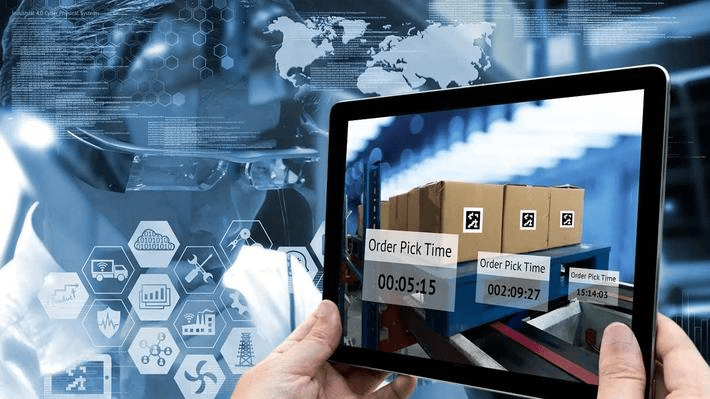
Understanding AI in Inventory Management
AI, or artificial intelligence, refers to the simulation of human intelligence processes by machines, especially computer systems. These processes include learning (the acquisition of information and rules for using the information), reasoning (using the rules to reach approximate or definite conclusions), and self-correction. In the context of inventory management, AI utilizes these capabilities to optimize various aspects of the supply chain, from demand forecasting to inventory optimization and order management.
Demand Forecasting
One of the most significant impacts of AI in inventory management is its ability to improve demand forecasting. Traditional forecasting methods often rely on historical sales data and simple trend analysis, which can be inadequate in the face of fluctuating market conditions, seasonal variations, and unforeseen events. AI, on the other hand, can analyze vast amounts of data from various sources – including market trends, social media sentiment, economic indicators, and weather patterns – to predict future demand with remarkable accuracy.
Machine learning algorithms, a subset of AI, continuously learn from new data, improving their predictions over time. This dynamic approach allows businesses to adjust their inventory levels in real-time, reducing the risk of overstocking or stockouts, which can lead to significant cost savings and improved customer satisfaction.
Inventory Optimization
AI in inventory management also excels in optimizing inventory levels across multiple locations. For businesses with numerous warehouses, distribution centers, and retail outlets, maintaining the right amount of stock at each location can be a logistical nightmare. AI-driven systems can analyze sales patterns, lead times, and local demand variations to determine optimal stock levels for each site.
Moreover, AI can help in the segmentation of inventory, identifying which items are fast-moving, slow-moving, or seasonal. This enables businesses to prioritize resources and storage space more effectively. For instance, fast-moving items can be positioned closer to the shipping areas to speed up order fulfillment, while slow-moving items can be stored in less accessible locations, saving prime space for more critical products.
Automated Reordering
Automated reordering is another area where AI in inventory management proves invaluable. Traditional reordering systems often rely on static reorder points, which do not account for variability in demand or supply chain disruptions. AI-powered systems, however, can dynamically adjust reorder points based on real-time data, ensuring that inventory levels are maintained efficiently.
These systems can also automate the procurement process by generating purchase orders when inventory levels fall below a certain threshold. This not only reduces the workload on procurement teams but also minimizes the risk of human error. By ensuring timely reordering, businesses can avoid the costly consequences of stockouts and lost sales.
Enhanced Supply Chain Visibility
Supply chain visibility is critical for effective inventory management. AI technologies, including the Internet of Things (IoT) and blockchain, can provide real-time tracking of inventory as it moves through the supply chain. IoT devices, such as smart sensors and RFID tags, can monitor the condition and location of inventory in transit, while blockchain technology ensures transparency and security in transactions.
With AI-enhanced supply chain visibility, businesses can respond more swiftly to disruptions, such as delays or damage to goods, by rerouting shipments or adjusting delivery schedules. This proactive approach helps maintain continuity in operations and enhances the overall reliability of the supply chain.
Predictive Maintenance
AI in inventory management extends beyond just managing stock levels and optimizing orders; it also plays a crucial role in maintaining the equipment used in warehousing and logistics. Predictive maintenance, powered by AI, uses data from sensors on equipment to predict when maintenance is needed. This reduces the risk of unexpected breakdowns, ensuring that operations run smoothly and without interruption.
By analyzing patterns in equipment usage and performance, AI can forecast potential failures and suggest maintenance before they occur. This not only prolongs the life of the equipment but also helps in planning maintenance schedules without disrupting daily operations.
Cost Reduction and Profit Maximization
The integration of AI in inventory management leads to significant cost reductions and profit maximization. By optimizing inventory levels, businesses can reduce holding costs and minimize the capital tied up in excess inventory. Improved demand forecasting and automated reordering ensure that stock levels are aligned with actual demand, reducing wastage and obsolescence.
Furthermore, enhanced supply chain visibility and predictive maintenance contribute to more efficient operations, lowering operational costs and minimizing downtime. The cumulative effect of these improvements is a leaner, more responsive inventory management system that supports higher profitability.
Challenges and Future Prospects
Despite the clear advantages, the adoption of AI in inventory management is not without challenges. Implementing AI solutions requires a significant investment in technology and infrastructure, as well as training for staff to effectively use these new tools. Additionally, integrating AI with existing systems can be complex and time-consuming.
However, the future prospects of AI in inventory management are promising. As AI technology continues to evolve, it will become more accessible and affordable for businesses of all sizes. Advances in machine learning, data analytics, and IoT will further enhance the capabilities of AI, enabling even more precise and efficient inventory management.
Conclusion
AI in inventory management is transforming the way businesses handle their inventory, offering unprecedented levels of accuracy, efficiency, and cost savings. From demand forecasting and inventory optimization to automated reordering and predictive maintenance, AI provides a comprehensive solution to the challenges of modern inventory management. While the adoption of AI requires investment and adaptation, the long-term benefits far outweigh the initial hurdles, positioning businesses for success in an increasingly competitive market.
 FinTech blogs
Leave a comment