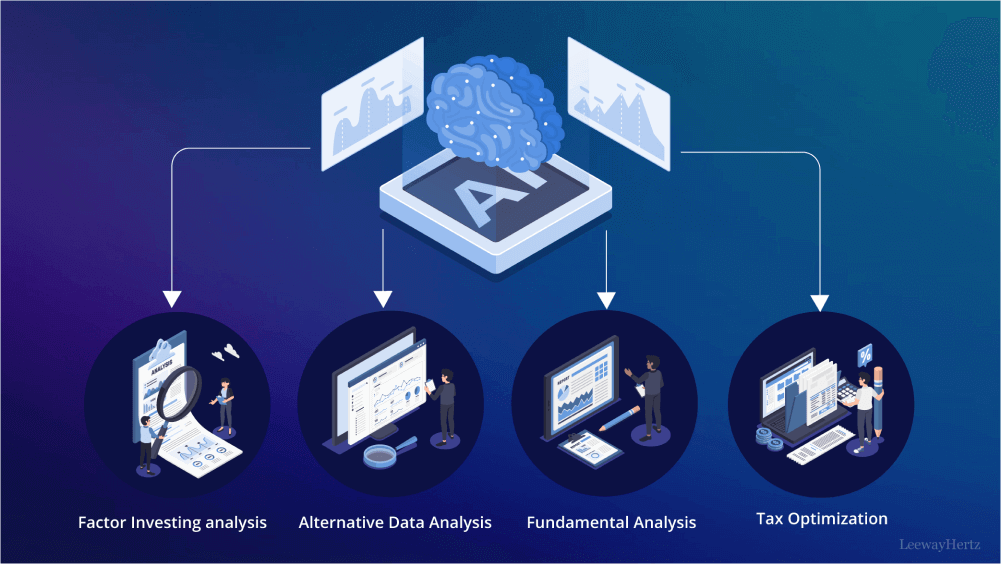
The advent of artificial intelligence (AI) has revolutionized numerous industries, and the field of portfolio management is no exception. AI’s ability to process vast amounts of data at unprecedented speeds, identify patterns, and make data-driven decisions is transforming the landscape of investment strategies. This article explores the multifaceted role of AI in portfolio management, highlighting its benefits, applications, and the future of investment strategies.
Understanding AI in Portfolio Management
The Basics of AI and Machine Learning
Artificial Intelligence (AI) refers to the simulation of human intelligence in machines designed to think and learn like humans. In the context of portfolio management, AI often utilizes machine learning (ML) algorithms, which are systems that improve their performance on a task over time by learning from data. These algorithms can analyze historical data, predict future trends, and make investment decisions with minimal human intervention.
The Evolution of Investment Strategies
Traditional portfolio management relies heavily on human expertise, intuition, and historical performance data. While experienced portfolio managers have successfully navigated financial markets for decades, the sheer volume and complexity of today’s data demand more advanced tools. AI provides the necessary computational power and analytical capabilities to process and interpret vast amounts of information, offering a competitive edge in modern investment strategies.
The Benefits of AI in Portfolio Management
Enhanced Data Processing and Analysis
AI excels at processing large datasets quickly and accurately. In portfolio management, this capability allows for the analysis of numerous variables simultaneously, including market trends, economic indicators, and company performance metrics. By synthesizing this information, AI can uncover insights that might be missed by human analysts, leading to more informed investment decisions.
Improved Predictive Accuracy
One of the key advantages of AI in portfolio management is its ability to predict market movements with higher accuracy. Machine learning models can be trained on historical data to recognize patterns and forecast future trends. These predictive models are continually refined as new data becomes available, enhancing their reliability over time.
Risk Management and Mitigation
AI’s analytical prowess extends to risk management as well. By assessing a multitude of risk factors in real-time, AI systems can identify potential threats to a portfolio and suggest adjustments to mitigate these risks. This proactive approach helps in maintaining the stability and performance of investment portfolios, even in volatile market conditions.
Cost Efficiency
Implementing AI in portfolio management can lead to significant cost savings. Automated systems reduce the need for extensive human labor, lowering operational costs. Furthermore, AI-driven strategies often result in more efficient trading, reducing transaction costs and improving overall portfolio performance.
Applications of AI in Portfolio Management
Algorithmic Trading
Algorithmic trading involves using computer algorithms to execute trades at optimal times and prices. AI enhances this process by developing sophisticated algorithms that can adapt to market changes in real-time. These AI-driven trading systems can execute high-frequency trades, capitalize on short-term market inefficiencies, and optimize trade execution, leading to improved returns.
Robo-Advisors
Robo-advisors are automated platforms that provide financial advice and portfolio management services with minimal human intervention. These platforms use AI to assess an investor’s risk tolerance, financial goals, and investment horizon, creating personalized portfolios that align with these parameters. Robo-advisors offer a cost-effective and accessible solution for individual investors seeking professional portfolio management.
Sentiment Analysis
AI can also analyze sentiment data from news articles, social media, and other sources to gauge market sentiment and its potential impact on asset prices. By incorporating sentiment analysis into their models, portfolio managers can better anticipate market reactions to news and events, making more informed investment decisions.
Portfolio Optimization
AI-powered portfolio optimization involves using advanced algorithms to construct portfolios that maximize returns for a given level of risk. These algorithms consider a wide range of factors, including asset correlations, expected returns, and market conditions, to create an optimal asset allocation. AI’s ability to process complex datasets and perform real-time optimization enhances the efficiency and effectiveness of portfolio management.
The Future of AI in Portfolio Management
Integrating AI with Human Expertise
While AI offers numerous advantages, it is not a replacement for human expertise. The future of portfolio management lies in the integration of AI with human judgment. AI can handle the heavy lifting of data analysis and predictive modeling, allowing portfolio managers to focus on strategic decision-making and client relationships. This synergy between AI and human expertise can lead to more robust and adaptive investment strategies.
Ethical and Regulatory Considerations
As AI becomes more prevalent in portfolio management, ethical and regulatory considerations will come to the forefront. Ensuring transparency in AI-driven decisions, maintaining data privacy, and adhering to regulatory standards are critical to gaining investor trust and fostering a fair investment environment. Policymakers and industry stakeholders must collaborate to develop frameworks that balance innovation with ethical responsibility.
Continuous Innovation and Adaptation
The financial markets are dynamic, and the tools used for portfolio management must continually evolve. AI technologies are advancing rapidly, and staying ahead of the curve requires ongoing innovation and adaptation. Investment firms that embrace AI and invest in research and development will be well-positioned to capitalize on emerging opportunities and navigate future challenges.
Conclusion
The role of AI in portfolio management is transformative, offering unprecedented capabilities in data analysis, predictive accuracy, risk management, and cost efficiency. By leveraging AI, portfolio managers can enhance their investment strategies, achieve better returns, and provide more personalized services to their clients. As AI technology continues to evolve, its integration with human expertise will shape the future of portfolio management, driving innovation and improving outcomes in the financial markets. The journey has just begun, and the potential of AI in portfolio management is boundless, promising a future where intelligent systems and human ingenuity work hand in hand to create more efficient and effective investment strategies.
 FinTech blogs
Leave a comment