Introduction
In today’s complex and volatile business landscape, risk management has become more crucial than ever before. From financial institutions to healthcare organizations, businesses are constantly exposed to various risks that can jeopardize their operations and profitability. However, with the advancements in artificial intelligence (AI), a paradigm shift is occurring in risk management practices. This article explores the transformative impact of AI in risk management and how it is reshaping the way organizations identify, assess, and mitigate risks.
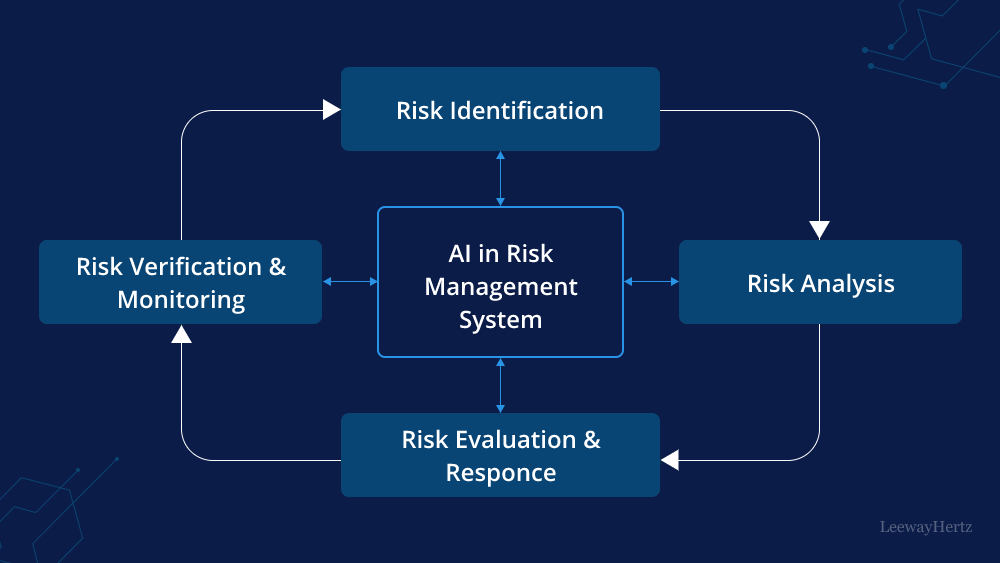
Understanding AI in Risk Management
Defining AI in Risk Management
AI in risk management refers to the application of artificial intelligence techniques such as machine learning, natural language processing, and predictive analytics to analyze data, identify potential risks, and make informed decisions to mitigate those risks effectively.
Key Components of AI in Risk Management
- Data Analysis and Processing: AI algorithms can process vast amounts of structured and unstructured data from various sources, including financial records, market data, social media feeds, and sensor data. By analyzing this data in real-time, AI systems can identify patterns, trends, and anomalies that may indicate potential risks.
- Predictive Modeling: AI enables organizations to build predictive models that forecast future risks based on historical data and current market conditions. These models can anticipate market fluctuations, credit defaults, cybersecurity threats, and other potential risks, allowing businesses to take proactive measures to mitigate them.
- Natural Language Processing (NLP): NLP algorithms enable AI systems to understand and analyze textual data, such as regulatory documents, news articles, and customer feedback. By extracting relevant information from text data, AI can identify compliance issues, regulatory changes, and emerging risks that may impact the organization.
- Risk Scoring and Prioritization: AI algorithms assign risk scores to different events or scenarios based on their likelihood and potential impact on the organization. By prioritizing risks according to their severity, organizations can allocate resources more effectively and focus on addressing the most critical threats first.
Applications of AI in Risk Management
Financial Risk Management
In the financial sector, AI is revolutionizing risk management practices by enabling more accurate risk assessments, faster decision-making, and enhanced portfolio optimization. AI-powered algorithms can analyze market trends, customer behavior, and credit risk factors to identify potential financial risks, such as market volatility, credit defaults, and fraud.
Cybersecurity Risk Management
With the rise of cyber threats, organizations are leveraging AI to strengthen their cybersecurity defenses and protect sensitive data from cyberattacks. AI-powered security systems can detect and respond to suspicious activities in real-time, identify emerging threats, and adapt to evolving attack techniques. By continuously monitoring network traffic, analyzing user behavior, and detecting anomalies, AI helps organizations prevent data breaches and safeguard their digital assets.
Operational Risk Management
AI plays a crucial role in operational risk management by automating routine tasks, optimizing processes, and identifying potential operational inefficiencies. By analyzing data from various operational systems, AI algorithms can detect anomalies, predict equipment failures, and identify process bottlenecks before they escalate into significant operational risks. This proactive approach helps organizations minimize downtime, improve productivity, and enhance operational resilience.
Compliance and Regulatory Risk Management
In heavily regulated industries such as banking, healthcare, and insurance, compliance with regulatory requirements is a top priority. AI-powered compliance systems help organizations ensure adherence to regulatory standards by analyzing vast amounts of regulatory documents, identifying compliance gaps, and recommending corrective actions. By automating compliance processes and monitoring regulatory changes, AI enables organizations to stay compliant and mitigate regulatory risks effectively.
Challenges and Opportunities
While AI offers numerous benefits in risk management, its adoption also poses challenges and risks. Concerns related to data privacy, algorithm bias, and interpretability are some of the key challenges organizations face when implementing AI in risk management. Moreover, the complexity of AI algorithms and the lack of skilled professionals proficient in AI technologies can hinder the widespread adoption of AI in risk management.
However, despite these challenges, the opportunities presented by AI in risk management are immense. By harnessing the power of AI to analyze vast amounts of data, organizations can gain deeper insights into potential risks, make more informed decisions, and enhance their overall risk management capabilities. Furthermore, AI enables organizations to automate repetitive tasks, streamline processes, and improve efficiency, ultimately reducing costs and increasing competitiveness.
Conclusion
In conclusion, AI is transforming the field of risk management by offering innovative solutions to identify, assess, and mitigate risks effectively. From financial risk management to cybersecurity risk management, AI-powered algorithms are revolutionizing risk management practices across various industries. While challenges such as data privacy and algorithm bias exist, the opportunities presented by AI in risk management far outweigh the risks. As organizations continue to embrace AI technologies, they will gain a competitive edge in managing risks and driving business success in an increasingly uncertain world.
 FinTech blogs
Leave a comment