In the modern business landscape, accurate demand forecasting is crucial for maintaining efficient operations and ensuring customer satisfaction. Traditional methods of demand forecasting often fall short due to their reliance on historical data and limited analytical capabilities. Enter artificial intelligence (AI), a game-changer that is transforming demand forecasting with its ability to analyze vast datasets, identify patterns, and provide accurate predictions. This article explores how AI is revolutionizing demand forecasting, the benefits it offers, and its practical applications.
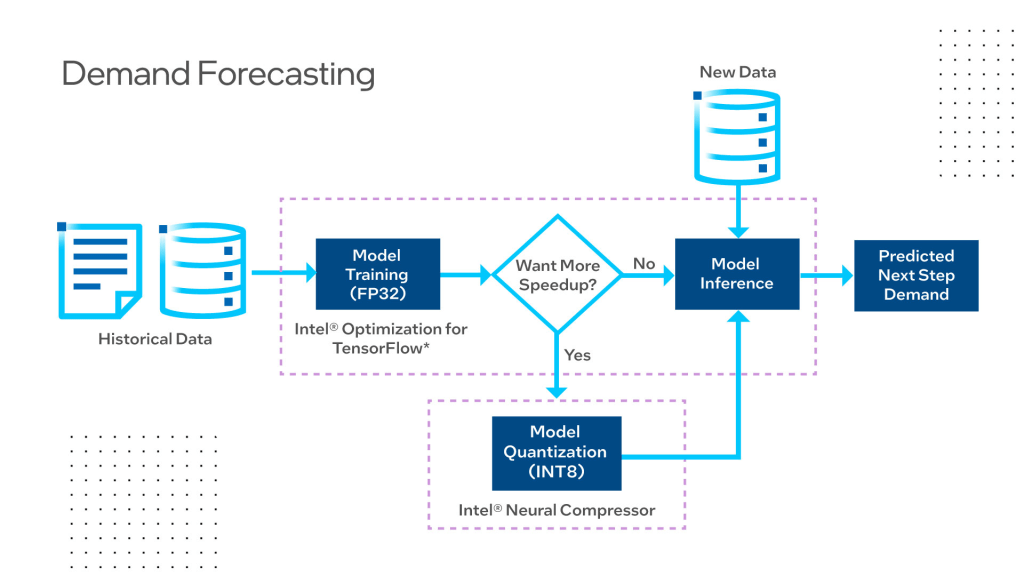
Understanding AI in Demand Forecasting
Artificial Intelligence Defined
Artificial Intelligence (AI) refers to the simulation of human intelligence in machines that are programmed to think and learn. In demand forecasting, AI uses advanced algorithms, machine learning, and data analytics to predict future customer demand for products and services.
Traditional vs. AI-Driven Demand Forecasting
Traditional demand forecasting methods typically rely on historical sales data, market trends, and statistical models. While useful, these methods often struggle to account for sudden market changes, seasonality, and other complex factors. AI-driven demand forecasting, on the other hand, leverages machine learning algorithms to process and analyze large volumes of data from diverse sources, including social media, weather reports, and economic indicators, providing more accurate and timely predictions.
The Benefits of AI in Demand Forecasting
Enhanced Accuracy
AI systems can analyze vast amounts of data far more efficiently than human analysts. By identifying patterns and correlations that might be overlooked by traditional methods, AI can provide more precise forecasts. This enhanced accuracy helps businesses make better decisions about inventory management, production planning, and marketing strategies.
Real-Time Insights
One of the standout features of AI in demand forecasting is its ability to provide real-time insights. Unlike traditional methods, which may take days or weeks to process data, AI can deliver up-to-the-minute predictions. This real-time capability allows businesses to respond swiftly to changing market conditions, reducing the risk of stockouts or overstock situations.
Scalability
AI systems are highly scalable, making them suitable for businesses of all sizes. Whether a company is dealing with a small dataset or handling massive amounts of data from multiple sources, AI can scale its processing power to meet the demand. This flexibility ensures that businesses can grow without being hindered by outdated forecasting methods.
Practical Applications of AI in Demand Forecasting
Retail Sector
In the retail sector, AI-driven demand forecasting is being used to optimize inventory levels, reduce wastage, and improve customer satisfaction. For example, online retailers like Amazon use AI to predict customer preferences and ensure that popular items are always in stock. This not only improves the customer experience but also boosts sales.
Manufacturing Industry
Manufacturers benefit from AI by using it to forecast demand for raw materials and finished products. This enables them to streamline their supply chain, reduce costs, and avoid production delays. AI can also predict equipment maintenance needs, reducing downtime and enhancing operational efficiency.
Food and Beverage Industry
AI is particularly beneficial in the food and beverage industry, where demand can be highly volatile. By analyzing factors such as weather patterns, local events, and consumer trends, AI can help businesses accurately forecast demand and adjust their production schedules accordingly. This reduces food waste and ensures fresh products are always available to customers.
Healthcare Sector
In the healthcare sector, AI-driven demand forecasting helps hospitals and clinics manage their inventories of medical supplies and pharmaceuticals. By predicting patient influx and treatment requirements, healthcare providers can ensure they have the necessary resources on hand, improving patient care and operational efficiency.
Challenges and Considerations
Data Quality and Availability
While AI offers significant advantages, its effectiveness is highly dependent on the quality and availability of data. Inaccurate or incomplete data can lead to incorrect forecasts, negating the benefits of AI. Businesses must invest in robust data collection and management systems to ensure the reliability of their forecasts.
Integration with Existing Systems
Integrating AI into existing demand forecasting systems can be challenging. Businesses need to ensure that their current infrastructure can support AI technologies and that employees are trained to use these new tools effectively. This may require significant time and financial investment.
Ethical and Privacy Concerns
The use of AI in demand forecasting raises ethical and privacy concerns, particularly regarding the collection and use of customer data. Businesses must navigate these issues carefully, ensuring compliance with data protection regulations and maintaining customer trust.
The Future of AI in Demand Forecasting
As AI technology continues to evolve, its applications in demand forecasting are expected to expand. Future advancements may include even more sophisticated algorithms capable of predicting demand with unprecedented accuracy. Additionally, AI could integrate with other emerging technologies, such as the Internet of Things (IoT) and blockchain, to provide a holistic approach to demand forecasting and supply chain management.
Conclusion
AI in demand forecasting represents a significant leap forward for businesses seeking to optimize their operations and improve customer satisfaction. By providing enhanced accuracy, real-time insights, and scalability, AI is revolutionizing how companies predict and respond to market demand. As technology continues to advance, the role of AI in demand forecasting will undoubtedly become even more critical, helping businesses navigate the complexities of the modern marketplace with confidence and precision.
 FinTech blogs
Leave a comment