Introduction
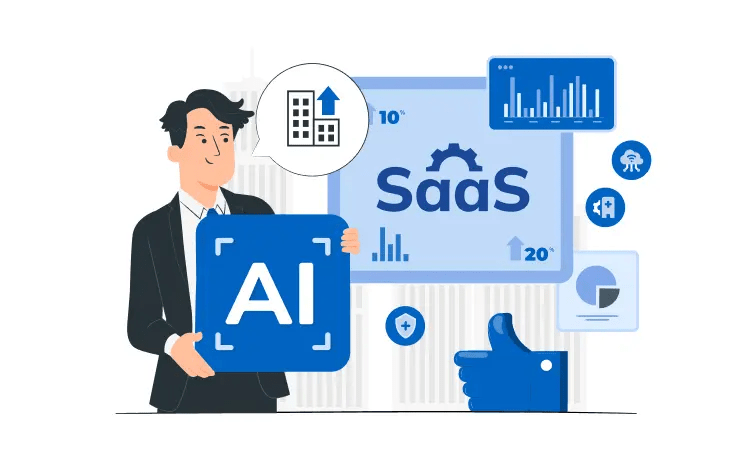
Artificial Intelligence (AI) is reshaping industries worldwide, and the Software as a Service (SaaS) sector is no exception. The integration of AI in SaaS platforms has opened new avenues for businesses, enabling them to streamline operations, enhance customer experience, and drive innovation. This article explores how AI in SaaS is revolutionizing business operations and what the future holds for this dynamic synergy.
Enhancing Customer Experience
1. Personalized User Experience
AI in SaaS is significantly improving how companies interact with their customers. By leveraging machine learning algorithms, SaaS platforms can analyze user behavior and preferences to deliver personalized experiences. This personalization can range from tailored product recommendations to customized content delivery, enhancing user satisfaction and engagement.
2. Advanced Customer Support
AI-powered chatbots and virtual assistants are becoming integral components of SaaS platforms. These tools provide instant, 24/7 support to customers, addressing common queries and issues efficiently. Natural language processing (NLP) enables these AI systems to understand and respond to customer inquiries in a human-like manner, improving the overall customer support experience.
Optimizing Business Processes
1. Automated Workflows
One of the most significant advantages of integrating AI in SaaS is the automation of repetitive tasks. AI-driven automation tools can handle tasks such as data entry, scheduling, and report generation, freeing up valuable time for employees to focus on more strategic activities. This not only boosts productivity but also reduces the risk of human error.
2. Predictive Analytics
AI in SaaS platforms empowers businesses with predictive analytics capabilities. By analyzing historical data, AI algorithms can forecast future trends, customer behaviors, and market demands. This foresight enables companies to make data-driven decisions, optimize inventory management, and devise effective marketing strategies, ultimately enhancing business performance.
Driving Innovation
1. Enhanced Product Development
AI is transforming how SaaS companies develop and improve their products. Machine learning models can analyze user feedback and usage patterns to identify areas for improvement and innovation. This continuous feedback loop allows SaaS providers to iterate quickly, delivering better and more relevant features to their users.
2. Competitive Advantage
Incorporating AI in SaaS solutions provides a competitive edge in a crowded market. AI-driven insights and automation capabilities enable companies to differentiate their offerings and provide superior value to customers. As a result, businesses that leverage AI in their SaaS platforms are more likely to attract and retain customers, ensuring long-term success.
Challenges and Considerations
1. Data Privacy and Security
While AI in SaaS offers numerous benefits, it also raises concerns about data privacy and security. SaaS providers must ensure that their AI systems comply with data protection regulations and implement robust security measures to safeguard sensitive information. Building trust with customers is crucial, and transparent data handling practices play a significant role in achieving this.
2. Integration and Adoption
Implementing AI in existing SaaS platforms can be complex and requires careful planning. Companies must invest in the right infrastructure and talent to seamlessly integrate AI capabilities into their systems. Additionally, fostering a culture of innovation and encouraging employees to embrace AI-driven tools are essential for successful adoption.
Future Prospects
1. Continuous Advancements
The future of AI in SaaS looks promising, with continuous advancements in AI technologies. As AI algorithms become more sophisticated and accessible, SaaS platforms will be able to offer even more powerful and intuitive solutions. This evolution will further enhance user experiences, streamline operations, and drive business growth.
2. Democratization of AI
As AI becomes more mainstream, its adoption in SaaS is likely to increase across businesses of all sizes. The democratization of AI will empower small and medium-sized enterprises (SMEs) to leverage advanced AI capabilities without significant upfront investments. This accessibility will level the playing field and foster innovation across industries.
Conclusion
AI in SaaS is transforming the way businesses operate, offering unprecedented opportunities for growth and efficiency. From enhancing customer experiences to optimizing business processes and driving innovation, the integration of AI in SaaS platforms is proving to be a game-changer. However, businesses must address challenges related to data privacy, security, and integration to fully realize the potential of AI in SaaS. As technology continues to evolve, the synergy between AI and SaaS will undoubtedly shape the future of business operations, creating a more intelligent, efficient, and customer-centric landscape.
 FinTech blogs
Leave a comment