Artificial Intelligence (AI) is revolutionizing various sectors, and enterprises are no exception. One of the most promising advancements in this domain is the rise of AI agents for enterprises. These intelligent agents are streamlining operations, enhancing decision-making, and driving innovation. This article explores the impact of AI agents on enterprises, their benefits, and real-world applications.
What are AI Agents for Enterprises?
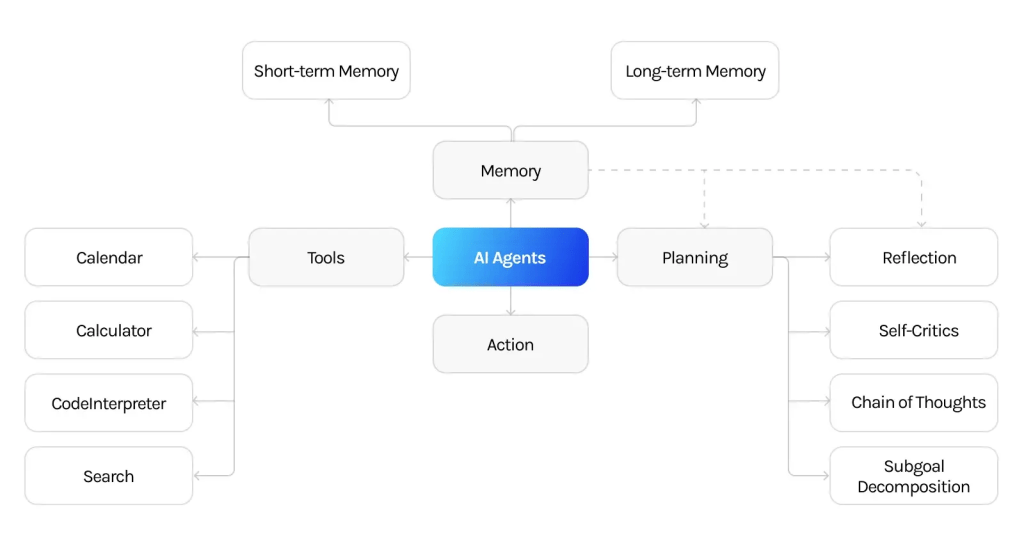
AI agents are software programs designed to perform tasks autonomously by learning from data, recognizing patterns, and making decisions with minimal human intervention. In enterprises, these agents can handle a wide range of functions, from customer service and HR management to predictive maintenance and data analysis. By integrating AI agents, businesses can automate routine tasks, optimize processes, and focus on strategic initiatives.
Benefits of AI Agents for Enterprises
Enhanced Efficiency and Productivity
One of the primary advantages of AI agents for enterprises is their ability to boost efficiency and productivity. AI agents can handle repetitive tasks such as data entry, scheduling, and report generation. This automation frees up employees to focus on higher-value activities, leading to improved overall productivity. For example, AI-powered chatbots can manage customer inquiries 24/7, reducing the workload on human agents and ensuring timely responses.
Improved Decision-Making
AI agents analyze vast amounts of data quickly and accurately, providing insights that support better decision-making. They can identify trends, forecast outcomes, and suggest optimal strategies. For instance, in supply chain management, AI agents can predict demand fluctuations and recommend inventory adjustments, minimizing stockouts and overstock situations.
Cost Savings
By automating routine tasks and optimizing processes, AI agents help enterprises reduce operational costs. They minimize the need for manual labor, reduce errors, and enhance resource utilization. For example, in manufacturing, AI agents can monitor equipment in real-time, predict maintenance needs, and prevent costly downtime.
Enhanced Customer Experience
AI agents significantly improve customer experience by providing personalized and efficient service. They can analyze customer data to offer tailored recommendations, answer queries promptly, and resolve issues effectively. In the retail sector, AI agents can suggest products based on customer preferences and purchase history, enhancing customer satisfaction and loyalty.
Real-World Applications of AI Agents in Enterprises
Customer Service and Support
AI-powered chatbots and virtual assistants are becoming integral to customer service operations. These AI agents handle customer inquiries, process orders, and provide support around the clock. Companies like Amazon and Alibaba use AI chatbots to manage vast volumes of customer interactions, ensuring quick and accurate responses.
Human Resources Management
AI agents are transforming HR management by automating recruitment, onboarding, and employee engagement processes. They can screen resumes, schedule interviews, and even conduct initial assessments. AI agents also assist in monitoring employee performance, identifying training needs, and improving workforce management.
Sales and Marketing
In sales and marketing, AI agents analyze customer data to develop targeted campaigns, predict sales trends, and optimize pricing strategies. They help businesses understand customer behavior, segment audiences, and deliver personalized content. For example, AI agents in e-commerce platforms like Shopify analyze browsing patterns to recommend products, boosting sales and customer satisfaction.
Predictive Maintenance
In industries like manufacturing and logistics, AI agents play a crucial role in predictive maintenance. They monitor equipment performance, detect anomalies, and predict potential failures. This proactive approach helps enterprises minimize downtime, reduce maintenance costs, and extend the lifespan of machinery. Companies like General Electric and Siemens use AI agents to enhance their maintenance strategies.
Financial Services
AI agents are transforming financial services by automating tasks such as fraud detection, risk assessment, and investment management. They analyze transaction data to identify fraudulent activities, assess credit risk, and provide investment advice. Financial institutions like JPMorgan Chase and Goldman Sachs leverage AI agents to improve accuracy and efficiency in their operations.
Challenges and Considerations
Data Privacy and Security
The deployment of AI agents raises concerns about data privacy and security. Enterprises must ensure that they comply with data protection regulations and implement robust security measures to safeguard sensitive information.
Integration with Existing Systems
Integrating AI agents with existing enterprise systems can be challenging. Businesses need to ensure seamless interoperability and avoid disruptions in operations. This requires careful planning, testing, and collaboration with technology partners.
Ethical Considerations
The use of AI agents also involves ethical considerations, such as ensuring transparency, avoiding biases in decision-making, and maintaining accountability. Enterprises must establish ethical guidelines and monitor AI agents to ensure they operate fairly and responsibly.
The Future of AI Agents for Enterprises
The adoption of AI agents for enterprises is expected to grow rapidly in the coming years. Advances in machine learning, natural language processing, and data analytics will further enhance the capabilities of AI agents. Enterprises that embrace this technology will gain a competitive edge by improving efficiency, enhancing customer experience, and driving innovation.
As AI agents become more sophisticated, their applications in enterprises will expand, creating new opportunities and challenges. Businesses must stay informed about the latest developments in AI, invest in training and development, and foster a culture of innovation to fully leverage the potential of AI agents.
In conclusion, AI agents for enterprises are not just a trend but a transformative force reshaping the business landscape. By automating tasks, enhancing decision-making, and improving customer experiences, AI agents are helping enterprises achieve greater efficiency, cost savings, and competitive advantage. As technology continues to evolve, the role of AI agents in enterprises will only become more significant, paving the way for a smarter and more efficient future.
 FinTech blogs
Leave a comment