In today’s digitally connected world, the role of Artificial Intelligence (AI) in incident response has become increasingly pivotal. As cyber threats continue to evolve in complexity and frequency, organizations are turning to AI-driven solutions to bolster their defenses and mitigate potential risks. This article explores the transformative impact of AI on incident response strategies, highlighting its capabilities, challenges, and future prospects.
The Rise of AI in Incident Response
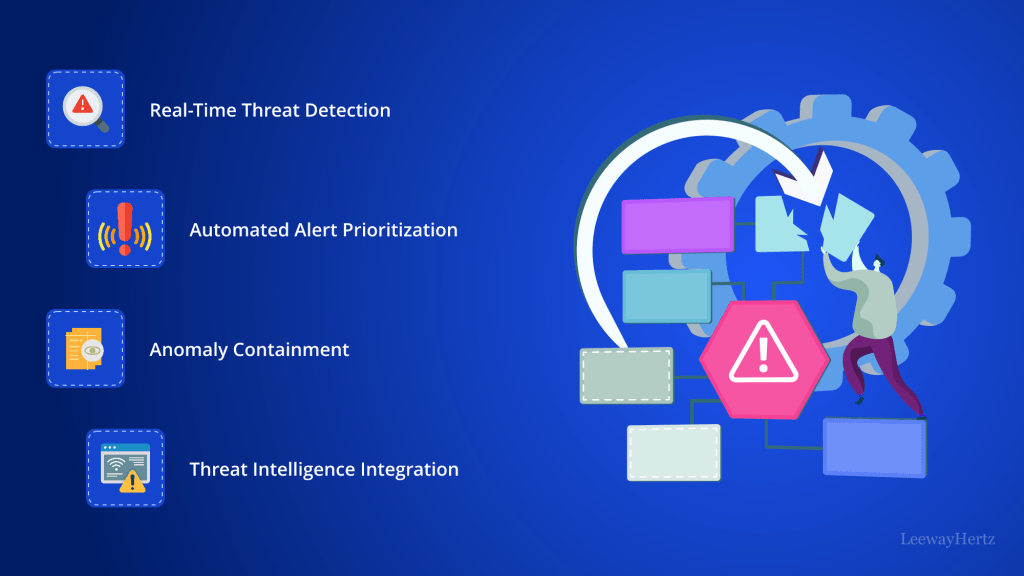
Traditionally, incident response involved reactive measures to handle cybersecurity breaches after they occurred. However, AI has revolutionized this approach by enabling proactive threat detection and rapid response capabilities. Machine learning algorithms, a subset of AI, analyze vast amounts of data in real-time to identify anomalous patterns and potential security incidents. This proactive stance allows organizations to detect and neutralize threats before they escalate, thereby minimizing damage and operational downtime.
Key AI Technologies Driving Incident Response
AI-powered technologies such as machine learning, natural language processing (NLP), and predictive analytics are at the forefront of modern incident response strategies:
- Machine Learning: Algorithms learn from historical data to recognize normal behavior patterns and deviations that may indicate a security incident. This enables early detection of anomalies and swift response times.
- Natural Language Processing (NLP): NLP algorithms analyze and interpret unstructured data sources, such as logs and incident reports, to extract meaningful insights. This capability enhances the speed and accuracy of incident identification and resolution.
- Predictive Analytics: By analyzing past incidents and current threat intelligence data, predictive analytics models can forecast potential future attacks. This proactive approach allows organizations to preemptively strengthen their defenses.
Benefits of AI in Incident Response
The integration of AI into incident response offers several notable advantages:
- Enhanced Speed and Accuracy: AI algorithms can process and analyze data at speeds far exceeding human capabilities, enabling rapid detection and response to security incidents.
- Continuous Monitoring: AI systems can monitor networks and systems 24/7 without fatigue, ensuring constant vigilance against evolving threats.
- Scalability: AI-driven solutions are highly scalable, capable of handling large volumes of data and adapting to the dynamic nature of cyber threats.
- Cost Efficiency: Automated incident response processes reduce the reliance on manual interventions, thereby optimizing resource allocation and reducing operational costs.
Challenges and Considerations
Despite its transformative potential, the adoption of AI in incident response is not without challenges:
- Data Quality and Availability: AI models rely on high-quality data for training and analysis. Poor data quality or insufficient data volumes can compromise the effectiveness of AI-driven solutions.
- Bias and Interpretability: AI algorithms may exhibit biases inherent in the data they are trained on, leading to skewed outcomes. Moreover, the interpretability of AI decisions remains a challenge, impacting trust and accountability.
- Cybersecurity Risks: AI systems themselves are vulnerable to adversarial attacks and exploitation. Securing AI models against manipulation is crucial to maintaining their integrity and reliability.
Future Trends and Innovations
Looking ahead, the future of AI in incident response holds promising developments:
- Autonomous Incident Response: AI-driven systems may evolve to autonomously detect, analyze, and mitigate security incidents without human intervention, enhancing response times and reducing workload pressures on cybersecurity teams.
- Integration with Threat Intelligence Platforms: AI technologies will increasingly integrate with threat intelligence feeds to enhance predictive capabilities and preemptive threat mitigation.
- Advancements in Explainable AI: Efforts to improve the interpretability and transparency of AI decisions will bolster trust and facilitate human-AI collaboration in incident response.
Conclusion
In conclusion, AI represents a paradigm shift in incident response, empowering organizations to fortify their cybersecurity posture with advanced threat detection and rapid response capabilities. While challenges such as data quality and interpretability persist, ongoing innovations promise to further enhance the efficacy and reliability of AI-driven solutions. As cyber threats continue to evolve, leveraging AI in incident response will be indispensable in safeguarding digital assets and maintaining resilience in an increasingly interconnected world.
 FinTech blogs
Leave a comment