Artificial Intelligence (AI) has become a cornerstone of innovation and efficiency across various sectors. This article delves into AI use cases and applications in major industries, showcasing how AI is transforming business operations and driving progress.
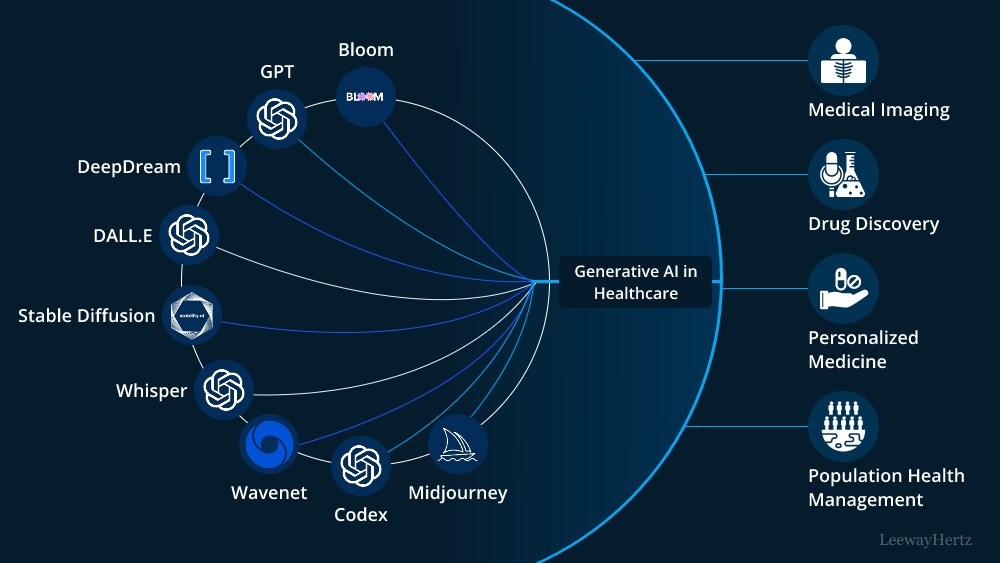
Healthcare: Enhancing Diagnosis and Treatment
AI use cases in healthcare are revolutionizing the way medical professionals diagnose and treat patients. One of the most significant applications is in medical imaging. AI algorithms analyze images from X-rays, MRIs, and CT scans with high accuracy, identifying abnormalities that might be missed by the human eye. This leads to early detection of diseases such as cancer, significantly improving patient outcomes.
Moreover, AI-powered tools are used in personalized medicine. By analyzing a patient’s genetic information, AI can predict how they will respond to different treatments, allowing for more customized and effective healthcare plans. Additionally, AI chatbots and virtual health assistants provide patients with instant medical advice and support, improving accessibility to healthcare services.
Finance: Automating and Securing Financial Services
In the finance industry, AI use cases include automating routine tasks and enhancing security. One prominent application is in fraud detection. AI systems monitor transactions in real-time, identifying unusual patterns and flagging potential fraudulent activities. This proactive approach helps in mitigating financial losses and protecting consumer data.
AI also streamlines customer service through chatbots, which handle inquiries and provide financial advice. These AI-driven bots are available 24/7, improving customer satisfaction and reducing operational costs. Furthermore, AI algorithms assist in investment management by analyzing market trends and making data-driven recommendations, aiding both individual investors and financial institutions in making informed decisions.
Retail: Personalizing the Shopping Experience
Retailers are leveraging AI to create more personalized and engaging shopping experiences. AI use cases in this industry include recommendation engines, which analyze customer behavior and preferences to suggest products they are likely to purchase. This not only enhances the customer experience but also boosts sales and customer loyalty.
Inventory management is another area where AI shines. Predictive analytics help retailers maintain optimal stock levels, reducing the risk of overstocking or stockouts. Additionally, AI-powered chatbots assist customers in finding products, answering questions, and providing post-purchase support, further enhancing the overall shopping experience.
Manufacturing: Optimizing Production and Maintenance
In manufacturing, AI use cases are centered around optimizing production processes and predictive maintenance. AI algorithms analyze data from various sensors on the production floor to identify inefficiencies and suggest improvements. This leads to increased productivity and reduced operational costs.
Predictive maintenance is another critical application. By monitoring equipment in real-time, AI can predict when a machine is likely to fail, allowing for timely maintenance and preventing costly downtime. This not only extends the lifespan of machinery but also ensures a smoother production process.
Transportation and Logistics: Improving Efficiency and Safety
AI is transforming the transportation and logistics industry by enhancing efficiency and safety. One notable AI use case is in route optimization. AI systems analyze traffic patterns, weather conditions, and other variables to determine the most efficient routes for delivery trucks and vehicles. This reduces fuel consumption, lowers costs, and ensures timely deliveries.
In addition, AI is integral to the development of autonomous vehicles. Self-driving cars and trucks use AI to navigate roads, recognize obstacles, and make real-time decisions, promising to reduce accidents caused by human error and improve overall road safety. In logistics, AI-powered robots and drones are being used for warehouse management and last-mile deliveries, streamlining operations and increasing efficiency.
Education: Personalizing Learning and Administration
AI use cases in education are enhancing both learning and administrative processes. Adaptive learning platforms use AI to tailor educational content to the individual needs of students. By analyzing their performance and learning styles, these platforms provide personalized resources and activities, improving engagement and learning outcomes.
AI also assists in administrative tasks such as grading and scheduling. Automated grading systems save educators time, allowing them to focus more on teaching. Additionally, AI chatbots help with student inquiries, enrollment processes, and providing academic support, making administrative processes more efficient and accessible.
Conclusion
The diverse AI use cases across major industries illustrate the transformative power of artificial intelligence. From healthcare to education, AI is enhancing efficiency, personalization, and security, driving innovation and progress. As AI technology continues to evolve, its applications will undoubtedly expand, offering even more opportunities for improvement and growth across various sectors. Embracing AI is not just a technological advancement but a strategic move towards a more efficient and intelligent future.
 FinTech blogs
Leave a comment