Building a generative AI solution is a complex but rewarding endeavor. Whether you’re looking to create art, text, or other types of content, understanding the process can help you develop an effective and impactful solution. This guide will walk you through the essential steps on how to build a generative AI solution, ensuring clarity and ease of understanding.
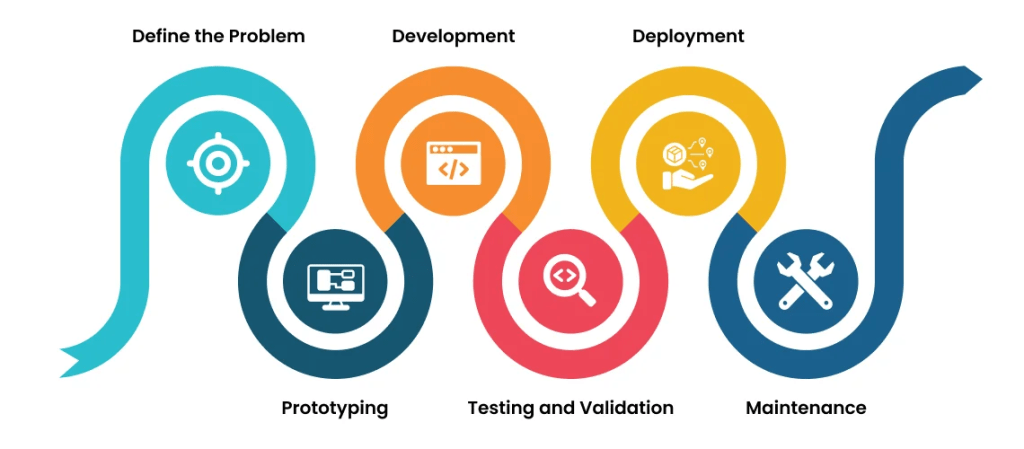
Understanding Generative AI
Before diving into the technicalities, it’s crucial to grasp what generative AI is. Generative AI refers to algorithms that can create new content based on the data they have been trained on. Unlike traditional AI, which might classify or analyze data, generative AI produces new, original content, such as text, images, or music.
Step 1: Define Your Objectives
The first step on how to build a generative AI solution is to clearly define your objectives. What do you want your AI to generate? Possible goals include:
- Text Generation: Creating articles, stories, or dialogue.
- Image Generation: Producing artwork or realistic images.
- Music Composition: Generating original music tracks.
Having a clear goal will help you select the right tools and methods for your generative AI project.
Step 2: Gather and Prepare Your Data
Data is the backbone of any generative AI solution. The quality and quantity of your data will significantly impact the performance of your AI model. Here’s how to prepare your data:
- Collect Data: Accumulate a large dataset relevant to your objective. For instance, if you’re building a text-generating model, gather a diverse range of texts.
- Clean Data: Remove any irrelevant or low-quality data. Ensure that your dataset is consistent and well-organized.
- Preprocess Data: Depending on the type of content you’re generating, preprocess your data to make it suitable for training. For text, this might include tokenization and normalization; for images, resizing and normalization are crucial.
Step 3: Choose the Right Model
Selecting the appropriate model is a key component in how to build a generative AI solution. Here are a few popular models:
- Generative Adversarial Networks (GANs): Ideal for generating images or other types of data by having two networks (a generator and a discriminator) work against each other.
- Variational Autoencoders (VAEs): Useful for generating new data points by learning the underlying data distribution.
- Transformers: Excellent for text generation and understanding context, used in models like GPT (Generative Pre-trained Transformer).
Consider the strengths and weaknesses of each model in relation to your objectives before making a choice.
Step 4: Train Your Model
Training is a critical step in how to build a generative AI solution. Here’s a simplified overview:
- Set Up Your Environment: Ensure you have the necessary computational resources, such as GPUs or cloud-based services, to handle the training process.
- Configure Hyperparameters: Set parameters like learning rate, batch size, and number of epochs. These will affect how well your model learns from the data.
- Train the Model: Feed your preprocessed data into the model and begin the training process. Monitor the training to ensure that the model is learning effectively and make adjustments as needed.
- Validate and Test: Regularly validate your model’s performance using a separate validation set. Once training is complete, test your model on new data to assess its ability to generate content accurately.
Step 5: Fine-Tune and Optimize
After initial training, fine-tuning and optimization are necessary to enhance your generative AI solution. This involves:
- Adjusting Hyperparameters: Based on the model’s performance, tweak the hyperparameters to improve results.
- Data Augmentation: Introduce new variations or augment your dataset to help the model generalize better.
- Regularization Techniques: Apply methods like dropout or weight decay to prevent overfitting and improve the model’s robustness.
Step 6: Deploy Your Solution
Once your model is trained and optimized, it’s time to deploy your generative AI solution. This involves:
- Integration: Incorporate the AI model into your application or platform where it will generate content.
- User Interface: Design a user-friendly interface if your solution will be interacted with by end-users.
- Monitoring and Maintenance: Continuously monitor the performance of your deployed model and make updates or retrain it as needed to ensure it remains effective over time.
Step 7: Evaluate and Iterate
The final step in how to build a generative AI solution is to evaluate its performance and iterate based on feedback. Gather input from users or stakeholders, assess the effectiveness of the generated content, and make any necessary improvements to enhance your solution’s quality.
Conclusion
Building a generative AI solution involves several key steps: defining objectives, preparing data, selecting the right model, training, fine-tuning, deploying, and iterating. By following these steps, you can develop a powerful generative AI system tailored to your specific needs. Whether you’re generating text, images, or music, understanding and executing these steps will set you on the path to creating an effective generative AI solution.
 FinTech blogs
Leave a comment