Introduction
Artificial Intelligence (AI) has emerged as a revolutionary force across various industries, and the banking and finance sector is no exception. As technology advances, the role of AI in banking and finance becomes increasingly significant, driving efficiency, enhancing customer experiences, and reducing operational costs. In this article, we will explore the impact of AI in banking and finance, focusing on its applications, benefits, and the future potential it holds for the industry.
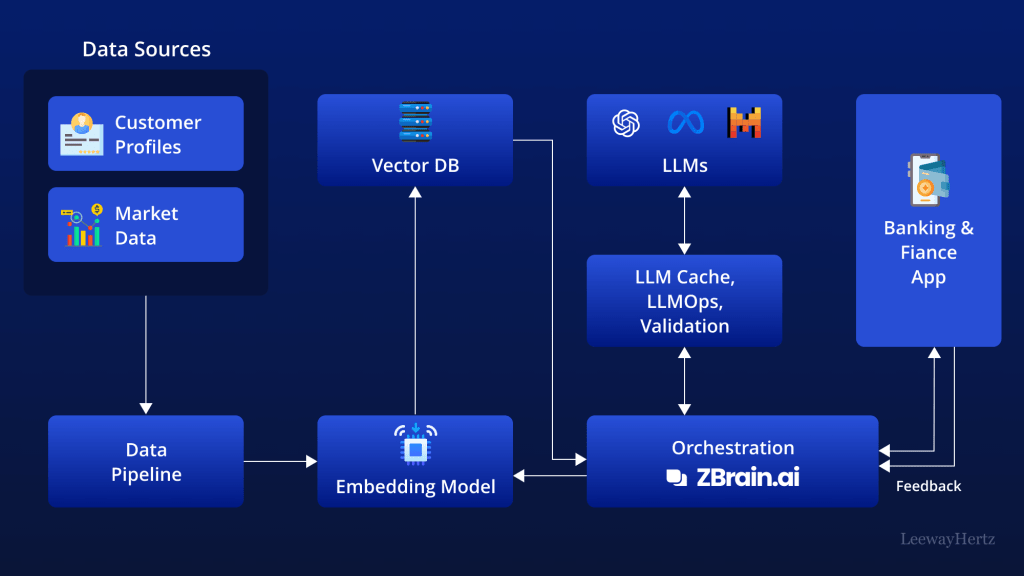
AI in Banking and Finance: A Game-Changer
The integration of AI in banking and finance has been a game-changer, reshaping the way financial institutions operate. AI technologies such as machine learning, natural language processing, and robotic process automation (RPA) have brought about profound changes in various aspects of the industry.
1. AI in Fraud Detection and Prevention
One of the most critical applications of AI in banking and finance is in fraud detection and prevention. Traditional methods of fraud detection often struggle to keep up with the increasingly sophisticated techniques used by fraudsters. AI, with its ability to analyze vast amounts of data in real-time, can identify unusual patterns and flag potential fraudulent activities. Machine learning algorithms continuously learn from new data, improving their accuracy over time. This proactive approach helps financial institutions minimize losses and protect their customers.
2. AI in Customer Service
AI-driven chatbots and virtual assistants have transformed customer service in the banking and finance sector. These AI-powered tools are available 24/7, providing instant responses to customer inquiries, resolving issues, and even offering personalized financial advice. By handling routine queries, AI frees up human agents to focus on more complex tasks, ultimately enhancing the overall customer experience. This not only improves customer satisfaction but also reduces operational costs for financial institutions.
3. AI in Risk Management
Risk management is a critical function in banking and finance, and AI plays a crucial role in this area. AI systems can analyze large datasets to identify potential risks and assess their impact on the organization. For instance, AI models can evaluate credit risk by analyzing a borrower’s financial history, spending behavior, and other relevant factors. This enables banks to make more informed lending decisions, reducing the likelihood of defaults. Moreover, AI can also predict market trends and economic shifts, helping financial institutions adjust their strategies accordingly.
4. AI in Personalization and Marketing
AI in banking and finance is not just about improving operational efficiency; it’s also about enhancing the customer experience through personalization. Financial institutions can leverage AI to analyze customer data and behavior, enabling them to offer personalized products and services. For example, AI can recommend investment portfolios tailored to an individual’s risk tolerance and financial goals. Additionally, AI-driven marketing campaigns can target specific customer segments with customized offers, increasing the likelihood of conversion and customer loyalty.
5. AI in Regulatory Compliance
Regulatory compliance is a complex and ever-evolving challenge for the banking and finance sector. AI can help institutions navigate this landscape by automating compliance processes and ensuring adherence to regulatory requirements. AI algorithms can monitor transactions and flag any suspicious activities that may indicate non-compliance. Furthermore, AI can keep track of changes in regulations and adjust compliance strategies accordingly, reducing the risk of penalties and legal issues.
The Future of AI in Banking and Finance
The future of AI in banking and finance looks promising, with continued advancements expected in the coming years. As AI technologies evolve, we can anticipate even greater levels of automation, enhanced customer experiences, and improved risk management. Moreover, the integration of AI with other emerging technologies such as blockchain and the Internet of Things (IoT) will further revolutionize the industry.
Financial institutions that embrace AI will be better positioned to stay competitive in an increasingly digital landscape. However, success in this area will require a strategic approach that addresses challenges related to data privacy, ethics, and workforce dynamics.
Conclusion
In conclusion, the role of AI in banking and finance is transforming the industry in profound ways. From fraud detection to personalized customer experiences, AI is driving innovation and efficiency in financial services. While challenges remain, the potential benefits of AI far outweigh the risks. As the industry continues to evolve, the adoption of AI will be key to shaping the future of banking and finance, enabling institutions to deliver more value to their customers and stakeholders.
 FinTech blogs
Leave a comment