Introduction
In today’s fast-paced digital world, the ability to manage and harness knowledge efficiently has become crucial for organizations. Enter the AI agent for knowledge management—a cutting-edge solution that is transforming how businesses capture, store, and utilize information. By automating and streamlining knowledge management processes, AI agents are helping organizations enhance productivity, reduce costs, and make more informed decisions.
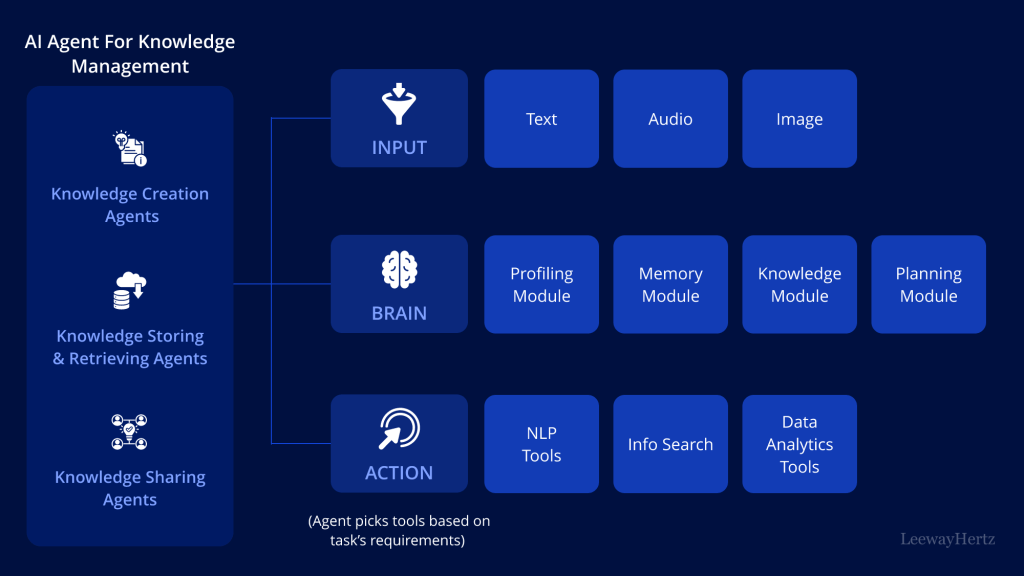
Understanding AI Agents in Knowledge Management
An AI agent for knowledge management is an artificial intelligence-driven system designed to assist with the acquisition, organization, retrieval, and dissemination of knowledge within an organization. These agents leverage advanced technologies such as machine learning, natural language processing, and data analytics to process vast amounts of information and deliver relevant insights.
How AI Agents Enhance Knowledge Management
AI agents bring a multitude of benefits to the table when it comes to knowledge management. Below are some of the key ways in which they enhance this critical function:
1. Automating Data Collection and Classification
One of the most time-consuming aspects of knowledge management is the manual collection and classification of data. An AI agent for knowledge management automates these tasks by continuously scanning and categorizing information from various sources, such as documents, emails, and databases. This automation ensures that data is organized and readily available, saving time and reducing the risk of human error.
2. Improving Knowledge Discovery
Traditional knowledge management systems often struggle with making information easily discoverable. AI agents overcome this challenge by employing sophisticated search algorithms and natural language processing to understand queries and retrieve the most relevant information. This capability allows users to find the knowledge they need quickly and accurately, enhancing overall efficiency.
3. Facilitating Collaboration
Effective knowledge management involves collaboration among teams and departments. An AI agent for knowledge management can facilitate this by providing real-time updates and recommendations based on the latest available data. These agents can also identify knowledge gaps and suggest ways to bridge them, fostering a culture of continuous learning and collaboration.
4. Personalizing Knowledge Delivery
Every employee has different knowledge needs based on their role, experience, and current projects. AI agents can analyze user behavior and preferences to tailor the delivery of information. By personalizing knowledge management, AI agents ensure that each user receives the most relevant content, improving engagement and productivity.
The Role of AI Agents in Decision-Making
One of the most significant impacts of an AI agent for knowledge management is its ability to enhance decision-making processes. By providing data-driven insights and recommendations, these agents empower decision-makers with the knowledge they need to make informed choices. Here’s how:
1. Analyzing Trends and Patterns
AI agents can sift through large datasets to identify trends and patterns that may not be immediately obvious to human analysts. By recognizing these patterns, organizations can make proactive decisions, such as anticipating market changes or identifying emerging risks.
2. Predictive Analytics
Predictive analytics is another powerful feature of AI agents. By analyzing historical data, an AI agent for knowledge management can forecast future outcomes, helping organizations plan strategically and allocate resources effectively.
3. Reducing Decision-Making Time
In a competitive business environment, speed is often critical. AI agents can quickly process vast amounts of data and deliver actionable insights, significantly reducing the time required to make decisions. This accelerated decision-making process can give organizations a competitive edge.
Implementing AI Agents for Knowledge Management
To fully leverage the potential of an AI agent for knowledge management, organizations need to approach implementation strategically. Here are some steps to consider:
1. Assessing Current Knowledge Management Systems
Before introducing an AI agent, it’s essential to evaluate the current knowledge management processes. This assessment helps identify areas where AI can have the most significant impact and ensures that the organization is ready for the transition.
2. Selecting the Right AI Solution
There are various AI agents available, each with different capabilities. It’s important to choose a solution that aligns with the organization’s specific needs and goals. Consider factors such as scalability, ease of integration, and vendor support when making this decision.
3. Training and Adoption
Successful implementation requires training employees on how to use the new AI agent effectively. Providing adequate support during the adoption phase will help ease the transition and maximize the benefits of the AI system.
Challenges and Considerations
While the benefits of an AI agent for knowledge management are clear, there are also challenges to consider. These include data privacy concerns, the need for continuous learning and updates, and the potential for job displacement. Organizations must address these challenges to ensure a smooth integration of AI into their knowledge management processes.
Conclusion
In conclusion, the AI agent for knowledge management is a transformative tool that is reshaping how organizations handle and utilize information. By automating processes, enhancing collaboration, and supporting decision-making, AI agents are enabling businesses to stay competitive in an increasingly data-driven world. As organizations continue to embrace this technology, those that effectively implement AI agents will be better positioned to thrive in the digital age.
 FinTech blogs
Leave a comment