Composite AI is reshaping the landscape of artificial intelligence by integrating various AI techniques to enhance performance, accuracy, and problem-solving capabilities. By combining multiple AI approaches like machine learning, natural language processing, and computer vision, Composite AI provides robust solutions for complex problems. This article delves into the benefits, applications, implementation strategies, and best practices of Composite AI, highlighting why it’s becoming a game-changer in the AI industry.
What is Composite AI?
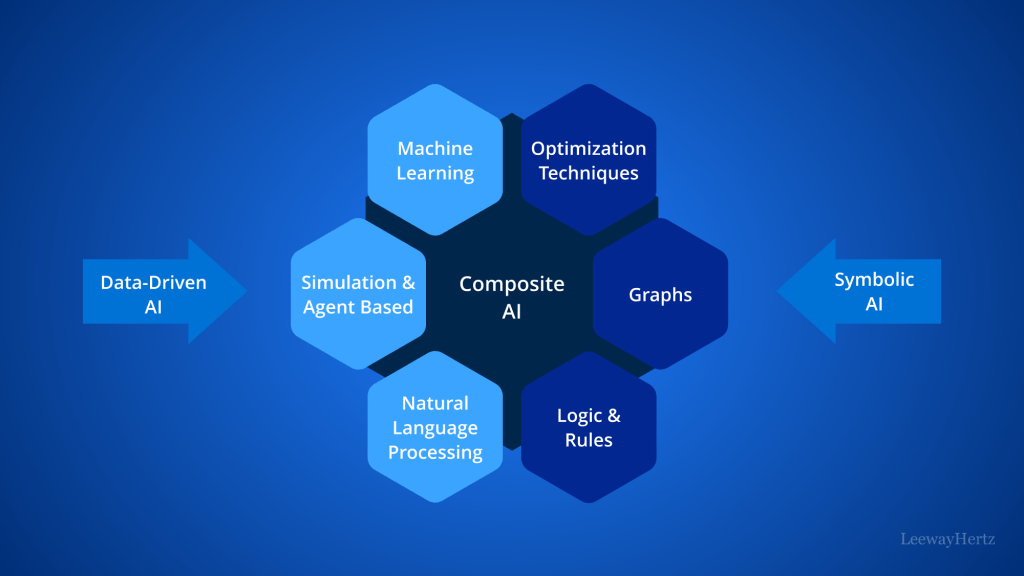
Composite AI is the fusion of multiple AI technologies to create a system that is more powerful and efficient than using a single AI approach. This synergy allows businesses to solve complex problems with higher accuracy, adaptability, and intelligence, offering a tailored solution that addresses specific needs. By leveraging a combination of algorithms, techniques, and data types, Composite AI offers a more holistic approach to AI development.
Benefits of Composite AI
- Enhanced Accuracy and Performance
Composite AI systems are more accurate because they combine different AI techniques that complement each other. For example, blending natural language processing (NLP) with machine learning models can improve the understanding and interpretation of human language, leading to better results in applications like chatbots and virtual assistants. - Increased Flexibility and Adaptability
Composite AI offers unmatched flexibility by allowing different models to work together. This adaptability ensures that AI systems can handle a wider range of scenarios and adjust to new data and conditions without needing to be retrained from scratch. - Better Decision-Making
By integrating multiple data sources and AI techniques, Composite AI systems provide deeper insights and support more informed decision-making. This is particularly beneficial in industries like finance, healthcare, and manufacturing, where complex decisions need to be made based on vast amounts of data. - Cost Efficiency
Composite AI can reduce costs by streamlining processes and minimizing errors. For example, predictive maintenance powered by Composite AI can save companies millions by identifying potential issues before they lead to costly downtimes.
Applications of Composite AI
- Healthcare
In healthcare, Composite AI is used to improve diagnostics, personalize treatment plans, and enhance patient care. By combining image recognition, NLP, and predictive analytics, Composite AI can analyze medical images, patient records, and research data to provide more accurate and timely diagnoses. - Finance
The financial sector benefits from Composite AI through fraud detection, risk assessment, and algorithmic trading. By merging machine learning with NLP, AI systems can analyze transactions, news, and market data to detect anomalies and predict market movements more effectively. - Retail and E-commerce
Composite AI enhances customer experience in retail by personalizing recommendations, optimizing inventory, and automating customer service. By integrating sentiment analysis with machine learning models, retailers can better understand customer preferences and behaviors. - Manufacturing
In manufacturing, Composite AI is used for predictive maintenance, quality control, and supply chain optimization. By combining sensor data analysis with machine learning, manufacturers can predict equipment failures, reduce downtime, and improve overall operational efficiency. - Smart Cities
Composite AI plays a crucial role in smart city initiatives by improving traffic management, energy efficiency, and public safety. For example, by integrating computer vision, NLP, and predictive analytics, cities can monitor traffic patterns, manage resources, and respond to emergencies more effectively.
Implementation Strategies for Composite AI
- Define Clear Objectives
Start by defining clear objectives and identifying the specific problems you aim to solve. Understanding your goals will help in selecting the right AI techniques to integrate. - Choose the Right AI Components
Not all AI techniques will be suitable for every problem. Choose AI components that complement each other and address different aspects of your requirements. For example, if you need to process text and images, combining NLP with computer vision would be ideal. - Data Integration and Management
Composite AI relies on diverse data sources. Ensure that your data is well-integrated, clean, and managed effectively. Data quality plays a crucial role in the performance of Composite AI systems. - Leverage Existing AI Frameworks and Tools
Use existing AI frameworks and tools to reduce development time and costs. Many Composite AI solutions can be built on open-source platforms like TensorFlow, PyTorch, and others, which offer robust libraries for integrating various AI techniques. - Iterative Development and Testing
Implement Composite AI in an iterative manner, starting with a prototype and gradually refining it. Regular testing and validation are essential to ensure that the AI components work well together and deliver the desired results.
Best Practices for Composite AI
- Focus on Data Security and Privacy
Protecting sensitive data is crucial, especially when dealing with healthcare, finance, or customer information. Ensure that your Composite AI system complies with data privacy regulations and employs robust security measures. - Regular Model Updating and Maintenance
AI models need regular updates to stay relevant and accurate. Set up a maintenance plan to monitor, retrain, and update the AI components of your system. - Cross-Disciplinary Collaboration
Composite AI often involves complex integrations that require expertise from multiple domains. Encourage collaboration between data scientists, domain experts, and engineers to build a more effective system. - Scalability Considerations
Plan for scalability from the outset. As your data grows, your Composite AI system should be able to handle increased loads without compromising performance.
Conclusion
Composite AI is transforming industries by providing more sophisticated, accurate, and adaptable AI solutions. Its ability to combine multiple AI techniques makes it a powerful tool for businesses looking to solve complex challenges. By following the right implementation strategies and best practices, organizations can harness the full potential of Composite AI to drive innovation, efficiency, and growth.
 FinTech blogs
Leave a comment