Introduction: The Emergence of Generative AI in Insurance
The insurance industry is undergoing a transformative shift with the integration of generative AI. This innovative technology is reshaping how insurance companies operate, enhancing customer experiences, and optimizing risk management. Generative AI in insurance is proving to be a game-changer, offering unprecedented capabilities that streamline processes and improve decision-making.
What is Generative AI?
Generative AI refers to artificial intelligence systems designed to create new content, generate solutions, and simulate scenarios based on input data. Unlike traditional AI that typically performs specific tasks based on pre-set rules, generative AI can learn from vast amounts of data to produce novel outcomes. In the context of insurance, this means creating sophisticated models that predict risk, personalize insurance policies, and automate claim processing.
Applications of Generative AI in Insurance
- Personalized Insurance Policies
One of the most significant applications of generative AI in insurance is the creation of personalized insurance policies. Traditional insurance models often rely on broad categories and standardized policies. However, generative AI can analyze individual customer data, including their behavior, health, and lifestyle, to tailor policies that meet specific needs. This customization not only enhances customer satisfaction but also improves policy effectiveness.
- Enhanced Risk Assessment
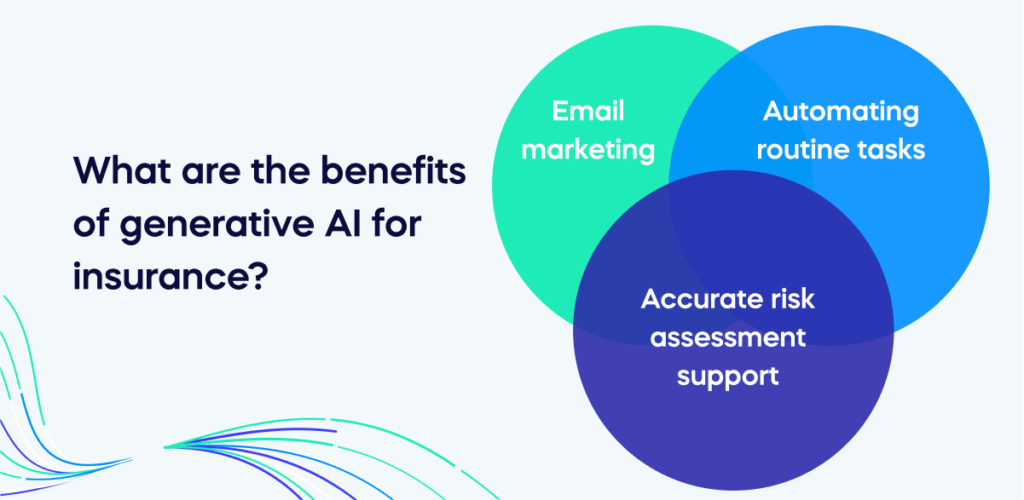
Generative AI in insurance plays a crucial role in enhancing risk assessment. By analyzing historical data, generative AI can identify patterns and predict future risks with greater accuracy. This allows insurance companies to adjust their underwriting processes, set more precise premiums, and manage risk more effectively. For instance, AI can evaluate the risk of natural disasters or emerging health trends, enabling insurers to develop proactive strategies.
- Automated Claim Processing
Claim processing is a critical area where generative AI is making a significant impact. Traditionally, this process is time-consuming and often prone to human error. Generative AI can automate many aspects of claim processing, from initial submission to final approval. It can review claim documents, verify information, and even detect fraudulent claims, significantly speeding up the process and reducing administrative costs.
- Improved Customer Service
Generative AI is also enhancing customer service in the insurance industry. Chatbots and virtual assistants powered by generative AI can handle a wide range of customer inquiries, provide instant support, and offer personalized recommendations. These AI-driven tools improve customer engagement and satisfaction by providing timely and accurate responses to queries and concerns.
Challenges and Considerations
While the benefits of generative AI in insurance are substantial, there are also challenges that need to be addressed. One of the primary concerns is data privacy and security. Insurance companies handle sensitive personal information, and the use of generative AI necessitates robust measures to protect this data from breaches and misuse.
Additionally, the accuracy of generative AI models depends on the quality and diversity of the data they are trained on. If the data is biased or incomplete, the AI’s predictions and recommendations may be flawed. Therefore, it is essential for insurance companies to ensure that their data sources are reliable and comprehensive.
Future Prospects
The future of generative AI in insurance looks promising. As technology continues to evolve, generative AI will likely become even more integrated into insurance operations. We can expect advancements in AI algorithms that enhance predictive accuracy, further personalization of insurance products, and even more efficient claim processing systems.
Moreover, generative AI is expected to play a significant role in developing new insurance models and products. For example, AI could enable the creation of dynamic insurance policies that adjust in real-time based on changing circumstances or emerging risks. This level of flexibility and responsiveness could revolutionize how insurance is approached and managed.
Conclusion: Embracing the Future with Generative AI
Generative AI in insurance is paving the way for a more efficient, personalized, and accurate insurance industry. By leveraging the power of AI, insurance companies can enhance risk management, improve customer service, and streamline operations. While challenges remain, the potential benefits of generative AI are immense. As the technology continues to advance, it is poised to redefine the insurance landscape, offering innovative solutions that meet the evolving needs of customers and the industry.
Embracing generative AI is not just a step forward; it is a leap into the future of insurance. Companies that invest in this technology will be well-positioned to thrive in the competitive insurance market and deliver exceptional value to their customers.
 FinTech blogs
Leave a comment