Introduction
In today’s fast-paced digital landscape, organizations face increasing challenges in maintaining compliance with regulatory standards. The complexity of global regulations, coupled with the ever-growing volume of data, has made compliance a critical yet daunting task. To navigate these challenges, companies are turning to advanced technologies, particularly AI agents, to streamline and enhance their compliance processes. AI agents in compliance are not just a futuristic concept but are rapidly becoming an essential tool for businesses striving to meet regulatory requirements efficiently and effectively.
The Growing Importance of Compliance
Compliance is the backbone of any regulated industry, ensuring that businesses adhere to laws, regulations, and ethical standards. Failure to comply can result in severe penalties, legal repercussions, and damage to a company’s reputation. Traditionally, compliance has been managed through manual processes, requiring significant time and resources. However, as regulations become more complex and the amount of data to be monitored increases, manual methods are no longer sufficient.
This is where AI agents in compliance come into play. By leveraging artificial intelligence, companies can automate and optimize their compliance efforts, reducing the risk of human error and enhancing their ability to stay ahead of regulatory changes.
What Are AI Agents?
AI agents are autonomous software programs designed to perform specific tasks with minimal human intervention. In the context of compliance, these agents can be programmed to monitor, analyze, and report on various aspects of a company’s operations to ensure they meet regulatory standards. AI agents can process vast amounts of data at a speed and accuracy that humans cannot match, making them ideal for handling the complexities of compliance.
How AI Agents Improve Compliance
- Automated Monitoring and Reporting
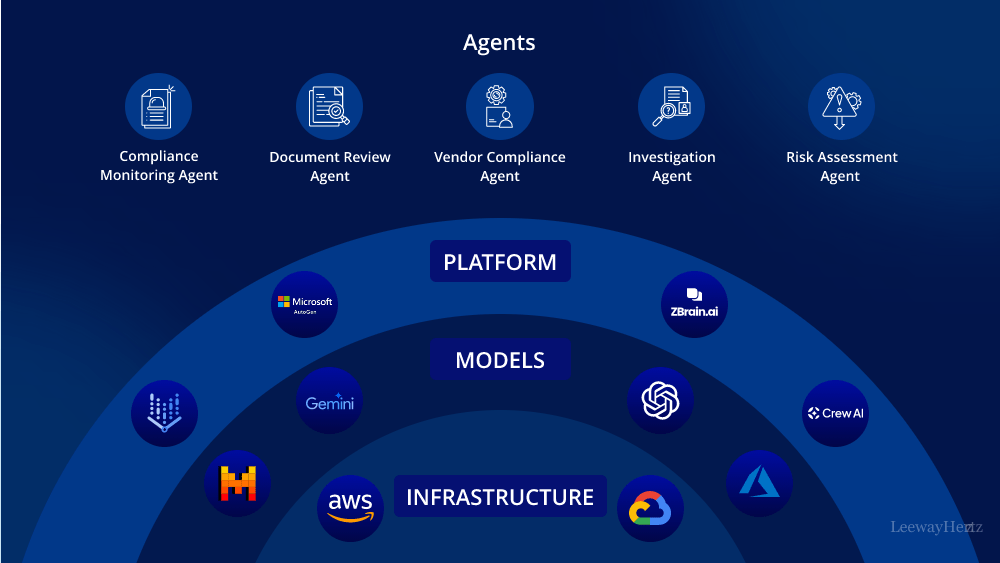
One of the primary roles of AI agents in compliance is automated monitoring. These agents continuously scan an organization’s data, transactions, and communications to detect any irregularities or non-compliance issues. For instance, in financial institutions, AI agents can monitor transactions in real-time to identify suspicious activities that may indicate money laundering or fraud. If a potential issue is detected, the AI agent can immediately alert the compliance team, who can then take appropriate action.
Automated reporting is another significant advantage. AI agents can generate detailed compliance reports based on the data they have analyzed, providing a comprehensive overview of the company’s compliance status. This not only saves time but also ensures that reports are accurate and up-to-date, which is crucial for regulatory audits.
- Regulatory Change Management
Regulations are constantly evolving, and staying updated with these changes is a major challenge for businesses. AI agents in compliance are equipped with the capability to track regulatory updates across different jurisdictions. These agents can automatically adjust the company’s compliance processes to align with new regulations, reducing the risk of non-compliance due to outdated practices.
Furthermore, AI agents can provide insights into how new regulations might impact the business, allowing companies to proactively adjust their strategies. This proactive approach to regulatory change management is essential in today’s dynamic regulatory environment.
- Risk Assessment and Mitigation
AI agents play a crucial role in risk assessment by analyzing data to identify potential compliance risks. They can assess various factors, such as financial transactions, customer behavior, and internal communications, to determine where the greatest risks lie. Once risks are identified, AI agents can recommend or even implement measures to mitigate these risks.
For example, in the healthcare industry, AI agents can analyze patient data to ensure compliance with privacy regulations like the Health Insurance Portability and Accountability Act (HIPAA). By identifying potential breaches or vulnerabilities, these agents help organizations take preemptive action to protect sensitive information.
The Benefits of AI Agents in Compliance
- Efficiency and Cost Savings
AI agents significantly enhance the efficiency of compliance processes. By automating tasks that would otherwise require extensive manual labor, companies can reduce operational costs and allocate resources to more strategic activities. The speed at which AI agents operate also means that compliance tasks that once took days or weeks can now be completed in real-time.
- Accuracy and Consistency
Human error is a common issue in manual compliance processes, leading to inaccuracies and inconsistencies. AI agents in compliance eliminate this risk by providing accurate, data-driven analysis and reporting. Their ability to operate 24/7 ensures that compliance monitoring is consistent and uninterrupted.
- Scalability
As businesses grow, so do their compliance needs. AI agents offer scalability, allowing companies to expand their compliance operations without a proportional increase in costs or resources. Whether a company operates in one jurisdiction or globally, AI agents can handle the complexity of different regulatory environments seamlessly.
Challenges and Considerations
While the benefits of AI agents in compliance are clear, there are challenges to consider. Implementing AI agents requires significant investment in technology and training. Additionally, there are concerns about data privacy and the potential for AI to make decisions without human oversight. It’s essential for companies to ensure that their AI agents are designed with transparency and accountability in mind.
Conclusion
AI agents in compliance are revolutionizing the way businesses manage their regulatory obligations. By automating monitoring, reporting, and risk assessment, these agents provide companies with the tools they need to stay compliant in an increasingly complex regulatory landscape. As technology continues to evolve, the role of AI agents in compliance will only become more critical, helping businesses navigate the challenges of compliance with greater efficiency and accuracy. Investing in AI-driven compliance solutions is not just a smart move—it’s becoming a necessity for businesses that want to thrive in the modern world.
 FinTech blogs
Leave a comment