In today’s digital landscape, fraud detection has become increasingly vital as financial transactions grow more complex and sophisticated. AI in fraud detection is emerging as a powerful tool to address this challenge. This article explores how AI in fraud detection is revolutionizing security measures and helping organizations stay one step ahead of fraudulent activities.
Understanding AI in Fraud Detection
Fraud detection involves identifying and preventing fraudulent activities, which can be challenging due to the ever-evolving nature of fraud schemes. Traditional methods rely heavily on rules-based systems and manual oversight, which can be slow and reactive. AI in fraud detection, however, introduces a proactive and adaptive approach.
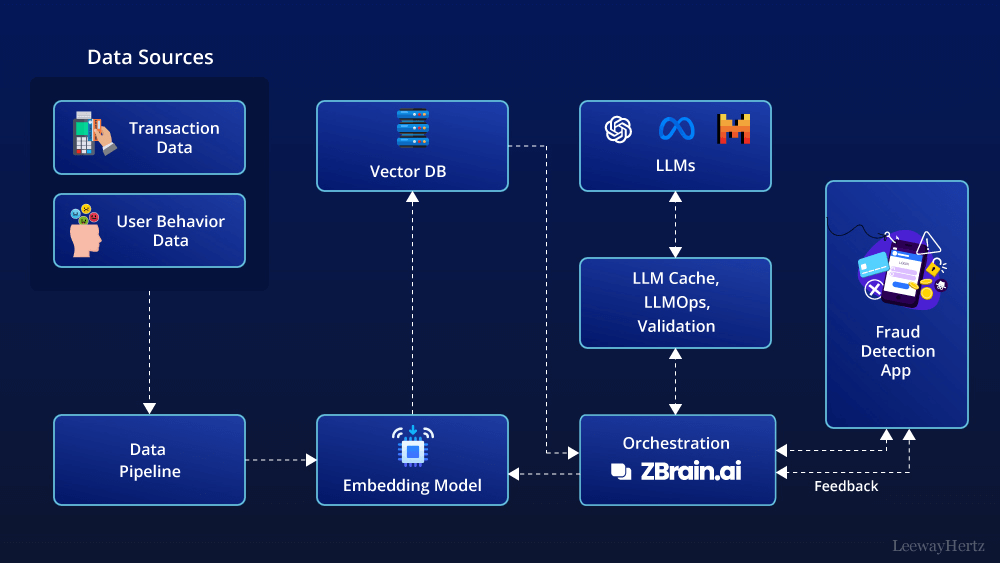
AI, or artificial intelligence, refers to the capability of a machine to imitate intelligent human behavior. When applied to fraud detection, AI leverages machine learning algorithms and data analytics to detect anomalies and patterns indicative of fraudulent activity. By analyzing large volumes of transaction data in real-time, AI in fraud detection can identify suspicious behavior that might go unnoticed by human analysts.
How AI Enhances Fraud Detection Capabilities
- Real-Time Analysis: One of the significant advantages of AI in fraud detection is its ability to analyze transactions in real-time. Traditional methods often involve a delay between the occurrence of a fraudulent activity and its detection. AI algorithms can instantly review and flag suspicious transactions as they occur, allowing for immediate action.
- Pattern Recognition: AI excels in identifying patterns within vast datasets. Machine learning models can detect subtle patterns and correlations that indicate potential fraud. By continuously learning from new data, AI systems become more proficient over time, adapting to new fraud tactics and evolving schemes.
- Reduced False Positives: False positives, where legitimate transactions are incorrectly flagged as fraudulent, can be a significant issue in traditional fraud detection systems. AI in fraud detection can minimize false positives by using advanced algorithms to distinguish between legitimate and fraudulent activities more accurately.
- Adaptive Learning: Unlike static rule-based systems, AI systems improve through adaptive learning. They analyze historical data to understand what constitutes normal and abnormal behavior. As new fraud techniques emerge, AI systems can update their models and strategies, maintaining their effectiveness.
The Role of AI in Different Sectors
AI in fraud detection is applicable across various sectors, including banking, insurance, and e-commerce. Each sector faces unique fraud challenges, but AI offers tailored solutions to address these issues.
- Banking: In the banking sector, AI helps detect and prevent credit card fraud, account takeovers, and unauthorized transactions. By analyzing transaction patterns and user behavior, AI can identify anomalies that may indicate fraudulent activity.
- Insurance: AI in fraud detection is also crucial in the insurance industry, where it helps identify fraudulent claims. Machine learning algorithms can detect patterns of fraudulent behavior in claims data, reducing the risk of payouts for fraudulent claims.
- E-commerce: For e-commerce platforms, AI helps prevent payment fraud and account abuse. AI systems can monitor user behavior and transaction patterns to flag suspicious activities, such as unusual purchase patterns or multiple failed login attempts.
Benefits of Implementing AI in Fraud Detection
The adoption of AI in fraud detection offers several benefits to organizations:
- Increased Efficiency: AI systems can process vast amounts of data quickly and accurately, improving the efficiency of fraud detection processes. This reduces the workload on human analysts and allows them to focus on more complex cases.
- Cost Savings: By reducing the number of false positives and improving detection accuracy, AI can lead to significant cost savings. Organizations can avoid the financial losses associated with fraudulent activities and the costs of manual fraud detection processes.
- Enhanced Security: AI provides a higher level of security by continuously monitoring and analyzing transaction data. This proactive approach helps organizations stay ahead of fraudsters and protect their financial systems more effectively.
Challenges and Considerations
While AI in fraud detection offers numerous advantages, it also presents some challenges. Ensuring data privacy and addressing ethical considerations are crucial. Organizations must also invest in the continuous training of AI systems to keep up with evolving fraud tactics.
Moreover, the success of AI in fraud detection depends on the quality and diversity of the data used to train the models. Poor-quality data can lead to inaccurate results and hinder the effectiveness of AI systems.
Future Prospects of AI in Fraud Detection
The future of AI in fraud detection looks promising as technology continues to advance. Innovations in machine learning and data analytics will further enhance the capabilities of AI systems. With ongoing research and development, AI will likely become even more effective in detecting and preventing fraudulent activities.
As organizations increasingly adopt AI in fraud detection, they will benefit from improved security, efficiency, and cost savings. By staying informed about the latest developments and best practices in AI, organizations can continue to protect their financial systems and maintain trust with their customers.
In conclusion, AI in fraud detection is transforming how organizations approach security and fraud prevention. Its ability to analyze data in real-time, recognize patterns, and adapt to new fraud tactics makes it a valuable tool in safeguarding financial systems. As technology evolves, AI will play an even more critical role in protecting against fraud and ensuring the integrity of financial transactions.
 FinTech blogs
Leave a comment