Introduction
In the evolving landscape of data-driven business strategies, the integration of AI in LTV models has become a game-changer. Lifetime Value (LTV) models help businesses predict the total revenue a customer is expected to generate over their lifetime. The application of AI in LTV models offers unprecedented accuracy and efficiency, enabling businesses to make informed decisions that drive growth and improve customer relationships. This article explores the role of AI in LTV models, its benefits, and how businesses can effectively harness its power.
Understanding LTV Models
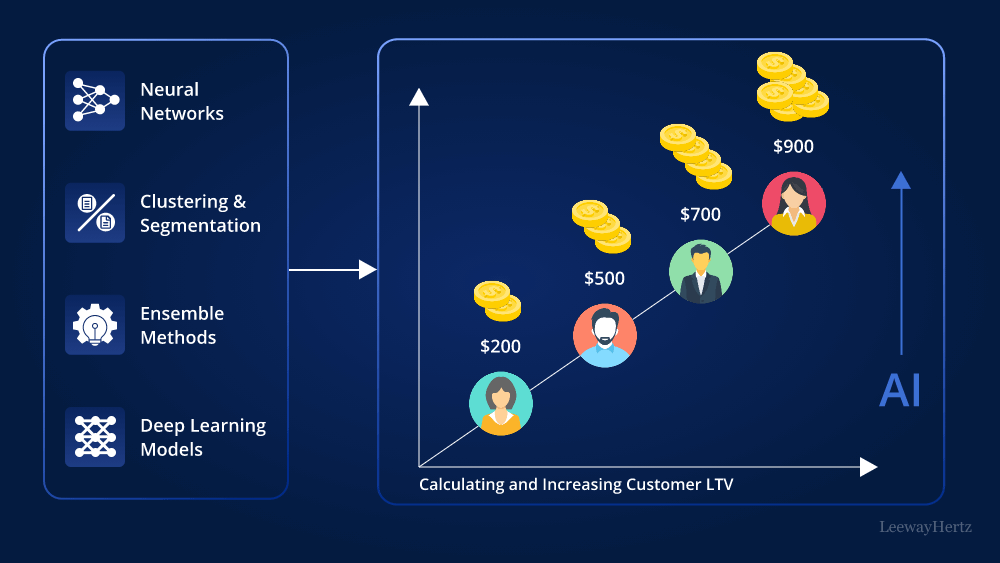
Lifetime Value models are crucial for businesses aiming to optimize customer acquisition and retention strategies. Traditional LTV models typically rely on historical data and basic statistical methods to estimate future revenue. However, these models can be limited in their predictive accuracy due to their reliance on static data and simplistic assumptions.
The Role of AI in LTV Models
AI technology revolutionizes LTV models by incorporating advanced algorithms and machine learning techniques. The role of AI in LTV models extends beyond basic calculations, offering dynamic and precise insights into customer behavior and potential value.
- Enhanced Predictive Accuracy One of the primary advantages of incorporating AI in LTV models is the improvement in predictive accuracy. AI algorithms can analyze vast amounts of data from various sources, including customer interactions, transaction history, and online behavior. By identifying patterns and trends that may not be apparent through traditional methods, AI enhances the ability of LTV models to forecast future customer value with greater precision.
- Real-time Data Processing AI-powered LTV models can process real-time data, providing businesses with up-to-date insights into customer behavior. This real-time processing allows companies to make timely decisions regarding marketing strategies, product offerings, and customer engagement initiatives. By leveraging AI in LTV models, businesses can respond quickly to changes in customer preferences and market conditions.
- Personalized Customer Insights The integration of AI in LTV models enables businesses to gain a deeper understanding of individual customer preferences and behaviors. AI algorithms can segment customers based on various attributes, such as purchasing habits, engagement levels, and demographic information. This segmentation allows for more personalized marketing strategies and tailored customer experiences, ultimately driving higher customer satisfaction and loyalty.
Benefits of AI in LTV Models
The incorporation of AI in LTV models offers several key benefits for businesses:
- Increased Revenue Potential By improving the accuracy of LTV predictions, AI helps businesses identify high-value customers and allocate resources more effectively. This targeted approach can lead to increased revenue potential by focusing efforts on retaining and upselling to customers with the highest predicted lifetime value.
- Optimized Marketing Strategies AI-driven LTV models enable businesses to refine their marketing strategies by providing insights into which customer segments are most likely to respond to specific campaigns. This optimization reduces marketing spend and enhances the overall return on investment (ROI) for marketing initiatives.
- Improved Customer Retention With a better understanding of customer behavior and preferences, businesses can implement more effective retention strategies. AI in LTV models helps identify at-risk customers and predict churn, allowing businesses to proactively address issues and enhance customer satisfaction.
- Efficient Resource Allocation AI-powered LTV models facilitate more efficient resource allocation by pinpointing high-value customers and prioritizing them in terms of service and support. This targeted approach ensures that resources are used where they can have the greatest impact on customer retention and revenue growth.
Implementing AI in LTV Models
To effectively harness the power of AI in LTV models, businesses should consider the following steps:
- Data Collection and Integration Successful implementation of AI in LTV models begins with comprehensive data collection. Businesses should gather data from various touchpoints, including sales transactions, customer interactions, and online activity. Integrating this data into a unified system enables AI algorithms to analyze and derive meaningful insights.
- Choosing the Right AI Algorithms Selecting the appropriate AI algorithms for LTV modeling is crucial. Different algorithms, such as regression analysis, clustering, and neural networks, offer varying levels of complexity and accuracy. Businesses should evaluate their specific needs and choose algorithms that align with their objectives.
- Continuous Monitoring and Optimization AI in LTV models requires ongoing monitoring and optimization to ensure continued accuracy and relevance. Businesses should regularly assess the performance of their models, update data inputs, and refine algorithms as needed. Continuous improvement helps maintain the effectiveness of AI-driven insights and predictions.
Conclusion
The integration of AI in LTV models represents a significant advancement in understanding and predicting customer value. By leveraging AI technology, businesses can achieve enhanced predictive accuracy, real-time insights, and personalized customer experiences. The benefits of AI in LTV models extend to increased revenue potential, optimized marketing strategies, improved customer retention, and efficient resource allocation. As businesses continue to embrace AI in their LTV modeling efforts, they will be well-positioned to drive growth and build stronger, more profitable customer relationships.
 FinTech blogs
Leave a comment