Introduction
Artificial Intelligence (AI) has become a pivotal force in various sectors, and gaming is no exception. The integration of AI in gaming has revolutionized the way games are designed, played, and experienced. From enhancing game environments to improving player interactions, AI in gaming has set new standards for the industry. This article explores how AI in gaming is reshaping the landscape and what it means for the future of interactive entertainment.
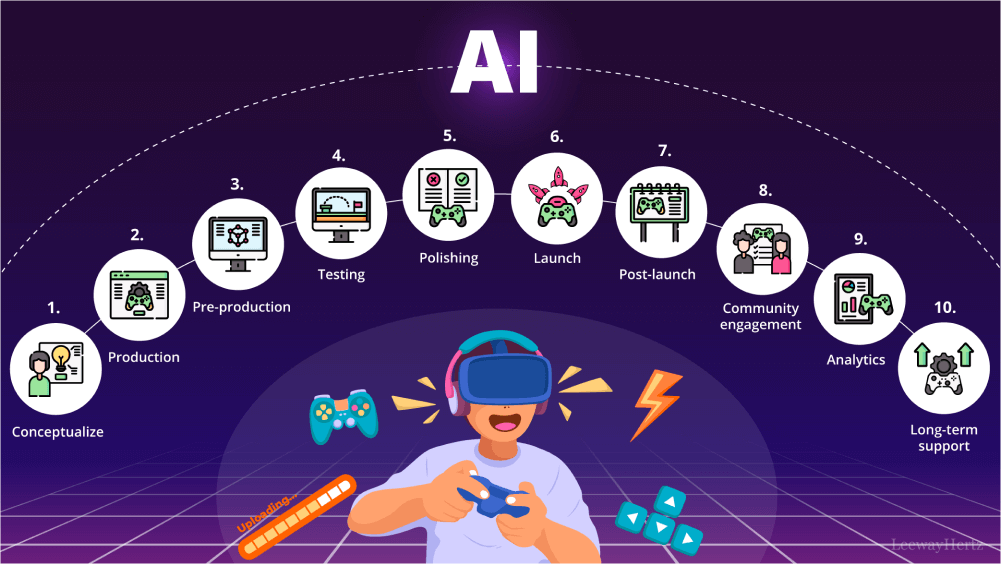
The Role of AI in Gaming
AI in gaming primarily focuses on creating more dynamic and responsive game experiences. Traditional video games often relied on preset scripts and simple algorithms to control non-player characters (NPCs) and manage game environments. However, AI has introduced more sophisticated methods to enhance these elements.
One significant application of AI in gaming is in the behavior of NPCs. Unlike their scripted predecessors, AI-driven NPCs can adapt to players’ actions and decisions, leading to more realistic and challenging interactions. For instance, AI algorithms can enable NPCs to learn from player strategies and modify their behavior accordingly, providing a unique experience in each gameplay session.
Enhancing Game Design with AI
AI in gaming extends beyond NPC behavior to influence game design and development. AI tools can analyze vast amounts of data to assist game developers in creating more engaging content. These tools can predict player preferences, identify potential issues in game mechanics, and even suggest improvements based on player feedback.
Procedural content generation is another area where AI in gaming plays a crucial role. AI algorithms can generate complex game environments, levels, and quests on the fly, ensuring that players always encounter new and intriguing challenges. This not only enhances the replayability of games but also allows developers to create expansive virtual worlds without manually designing every aspect.
AI-Driven Personalization and Adaptation
Personalization is a key benefit of AI in gaming. By analyzing player behavior and preferences, AI can tailor gaming experiences to individual users. This personalization might include adjusting difficulty levels, recommending new games based on past interests, or even modifying in-game content to better suit a player’s style.
Adaptive difficulty is a prime example of AI’s role in personalization. AI algorithms can monitor player performance in real-time and adjust the game’s difficulty to ensure an optimal balance between challenge and enjoyment. This helps in keeping players engaged and reduces frustration that can occur when a game is either too easy or too difficult.
Improving Player Interaction with AI
AI in gaming also enhances player interaction and social dynamics within games. AI-powered chatbots and virtual assistants can facilitate smoother communication between players and the game environment. These tools can provide players with hints, answer questions, and offer support, enriching the overall gaming experience.
Moreover, AI is being used to improve multiplayer experiences. For instance, AI can help in matchmaking by analyzing player skills and preferences to create balanced teams. This ensures that players face opponents of similar skill levels, making matches fairer and more enjoyable.
Challenges and Future Prospects
Despite the numerous benefits, the integration of AI in gaming is not without challenges. One major concern is the potential for AI to create overly complex systems that might be difficult for players to understand or predict. Balancing AI-driven elements with player agency is crucial to ensure that games remain enjoyable and accessible.
Another challenge is the ethical use of AI in gaming. Developers must consider issues such as data privacy and the potential for AI to be used in manipulative ways. Ensuring that AI systems are transparent and fair is essential to maintain player trust and satisfaction.
Looking ahead, the future of AI in gaming holds exciting possibilities. Advances in machine learning and neural networks are expected to further enhance the capabilities of AI in creating more immersive and intelligent gaming experiences. As technology evolves, we can anticipate even more innovative applications of AI in gaming that will push the boundaries of what is possible in virtual worlds.
Conclusion
AI in gaming is transforming the industry by enhancing game design, improving player interactions, and personalizing experiences. The role of AI in gaming extends far beyond simple NPC behavior, influencing various aspects of game development and player engagement. While there are challenges to address, the potential for AI to create more dynamic and immersive gaming experiences is immense. As technology continues to advance, AI in gaming will undoubtedly play an even more significant role in shaping the future of interactive entertainment.
 FinTech blogs
Leave a comment