Introduction
In the ever-evolving world of finance, the integration of artificial intelligence (AI) in loan underwriting is revolutionizing how loans are assessed and approved. AI in loan underwriting leverages advanced algorithms and data analysis to streamline processes, enhance accuracy, and improve customer experiences. This article explores the impact of AI in loan underwriting, highlighting its benefits, challenges, and future potential.
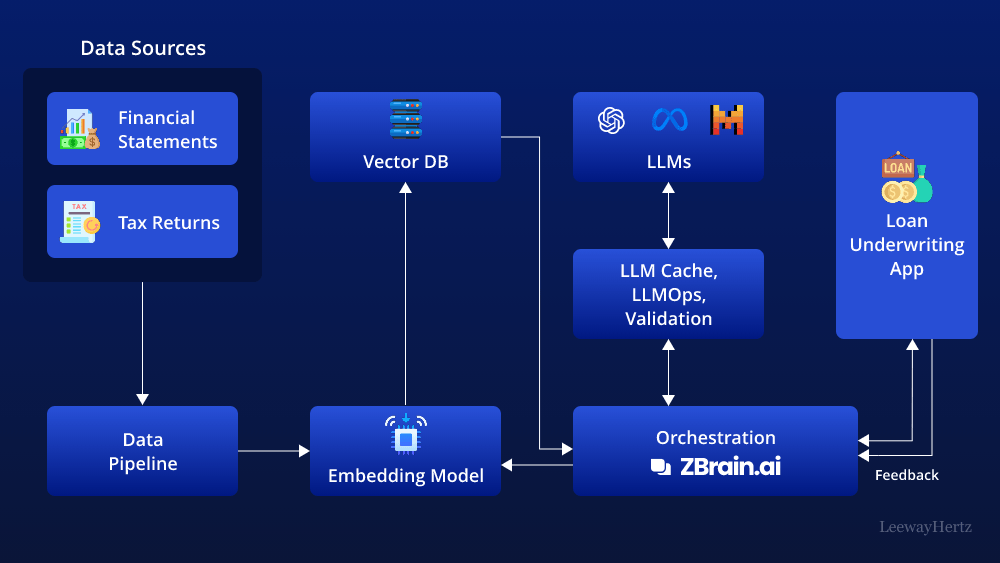
What is AI in Loan Underwriting?
AI in loan underwriting refers to the use of artificial intelligence technologies to evaluate and process loan applications. Traditional loan underwriting involves assessing an applicant’s creditworthiness based on a range of factors such as credit scores, income, and employment history. AI in loan underwriting automates and enhances this process by utilizing machine learning algorithms to analyze vast amounts of data quickly and accurately.
Benefits of AI in Loan Underwriting
- Increased Efficiency and Speed One of the most significant advantages of AI in loan underwriting is the improvement in efficiency and speed. Traditional underwriting processes can be time-consuming, often taking days or even weeks to complete. AI in loan underwriting automates many of these tasks, reducing processing times to mere hours or minutes. This rapid turnaround benefits both lenders and borrowers, facilitating quicker access to funds and a more streamlined application experience.
- Enhanced Accuracy and Risk Assessment AI in loan underwriting enhances the accuracy of risk assessments by analyzing a broader range of data points than traditional methods. Machine learning algorithms can identify patterns and correlations in data that may not be immediately apparent to human underwriters. This increased accuracy helps in better predicting the likelihood of default and assessing the risk associated with each loan application. As a result, lenders can make more informed decisions and potentially reduce the risk of loan defaults.
- Personalized Loan Offers AI in loan underwriting allows for more personalized loan offers tailored to individual borrowers’ needs. By analyzing a borrower’s financial history, spending habits, and other relevant data, AI can generate customized loan options that better match their financial situation. This personalized approach not only improves customer satisfaction but also increases the likelihood of loan approval and successful repayment.
- Reduction in Human Bias Human bias can inadvertently influence traditional underwriting processes, leading to inconsistencies and potential discrimination. AI in loan underwriting helps mitigate this issue by relying on data-driven decisions rather than subjective judgments. Algorithms can be designed to focus solely on relevant financial metrics, reducing the impact of personal biases and promoting fairness in loan approvals.
Challenges of AI in Loan Underwriting
- Data Privacy and Security Concerns The use of AI in loan underwriting requires the collection and analysis of extensive personal and financial data. This raises concerns about data privacy and security. Ensuring that sensitive information is protected and that data handling practices comply with regulations is crucial for maintaining borrower trust and safeguarding against potential breaches.
- Algorithmic Bias and Fairness While AI can reduce human bias, it is not entirely free from biases itself. Algorithms are trained on historical data, which may contain biases present in past lending practices. If not carefully managed, AI in loan underwriting can perpetuate these biases, leading to unfair treatment of certain groups of borrowers. Ongoing efforts are needed to ensure that algorithms are continuously monitored and adjusted to promote fairness and equity.
- Dependence on Data Quality The effectiveness of AI in loan underwriting heavily relies on the quality of data used for analysis. Inaccurate or incomplete data can lead to flawed assessments and decisions. Ensuring the accuracy and completeness of data is essential for the reliability of AI-driven underwriting processes. Lenders must implement robust data management practices to address this challenge.
The Future of AI in Loan Underwriting
The future of AI in loan underwriting holds exciting possibilities. As technology continues to advance, we can expect further improvements in AI algorithms and data analytics capabilities. Enhanced predictive models and more sophisticated AI tools will likely lead to even greater efficiency, accuracy, and personalization in loan underwriting processes.
Moreover, the integration of AI with other emerging technologies, such as blockchain and advanced analytics, may further transform the lending landscape. These innovations have the potential to create more secure, transparent, and efficient loan underwriting systems.
Conclusion
AI in loan underwriting is reshaping the lending industry by enhancing efficiency, accuracy, and personalization. While challenges such as data privacy, algorithmic bias, and data quality remain, the benefits of AI-driven underwriting are substantial. As technology evolves, the role of AI in loan underwriting will likely continue to grow, offering new opportunities for lenders and borrowers alike. Embracing these advancements can lead to a more streamlined, fair, and effective loan underwriting process.
 FinTech blogs
Leave a comment