Large Language Models (LLMs) have become pivotal in the field of artificial intelligence, transforming how we interact with technology. From natural language processing to text generation, LLMs are powering a wide array of applications. This article provides a clear and comprehensive comparison of large language models, exploring their features, performance, and practical uses.
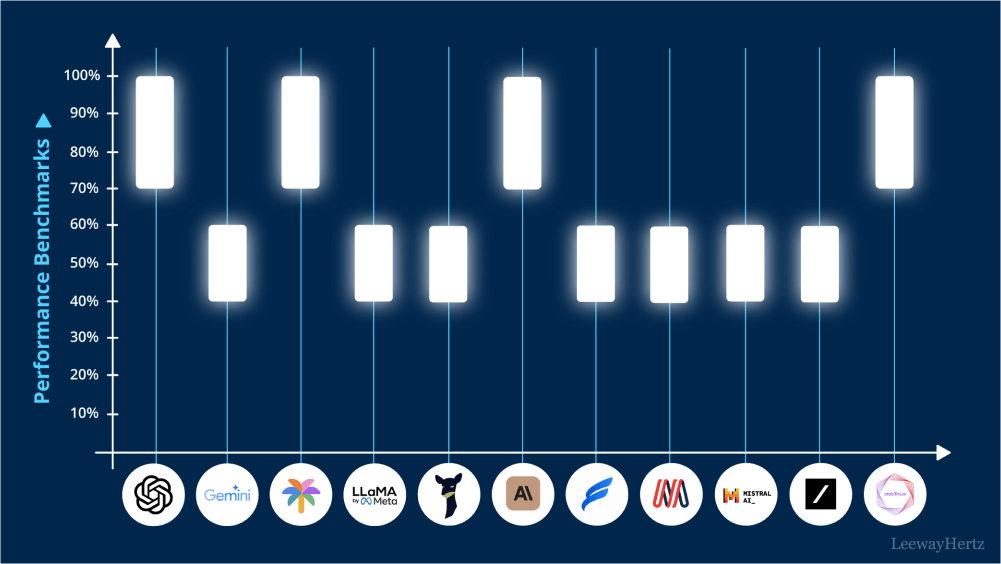
What Are Large Language Models?
Large language models are sophisticated algorithms trained on vast amounts of text data to understand, generate, and manipulate human language. These models leverage advanced machine learning techniques, particularly deep learning, to learn patterns in language and produce coherent and contextually relevant text. Their ability to understand context, nuances, and the structure of language enables them to perform various tasks, such as language translation, summarization, and sentiment analysis.
Key Features of Large Language Models
When considering the comparison of large language models, several features stand out:
1. Size and Complexity
The size of a language model typically refers to the number of parameters it has. Parameters are the elements of the model that are learned from the training data. Larger models generally have more parameters, allowing them to capture more complex language patterns. However, size does not always equate to performance. Smaller models can sometimes outperform larger ones in specific tasks due to their specialized training.
2. Training Data
The quality and quantity of training data significantly influence a model’s performance. Large language models are usually trained on diverse datasets that include books, articles, and websites. The richness of this training data allows the model to learn various language styles, vocabularies, and contexts. However, biases present in the training data can lead to biased outputs, making it crucial to consider data curation during model development.
3. Architecture
The architecture of a language model defines how it processes input and generates output. Many state-of-the-art LLMs utilize transformer architecture, which enhances their ability to understand contextual relationships in text. This architecture allows models to focus on different parts of the input simultaneously, improving their understanding and generation capabilities.
4. Fine-tuning Capabilities
Fine-tuning is the process of adapting a pre-trained model to specific tasks or datasets. This capability is vital for improving a model’s performance on niche applications. Models that allow for effective fine-tuning can be tailored to meet unique requirements, making them more versatile and effective in various real-world scenarios.
Performance Metrics
The comparison of large language models often hinges on performance metrics, which help evaluate their effectiveness across different tasks. Common metrics include:
1. Accuracy
Accuracy measures how well a model predicts or generates the expected output. In tasks like classification or summarization, higher accuracy indicates a better understanding of the input data.
2. Perplexity
Perplexity is a measure of how well a probability distribution predicts a sample. Lower perplexity scores indicate better performance, as the model is more confident in its predictions.
3. Speed and Efficiency
The speed at which a model can process input and generate output is crucial, especially for real-time applications. Efficient models can provide faster responses without sacrificing quality, making them more desirable for integration into various platforms.
Applications of Large Language Models
Large language models have a wide range of applications across different industries. Here are some notable uses:
1. Natural Language Processing
LLMs are widely used in natural language processing tasks such as sentiment analysis, named entity recognition, and language translation. Their ability to understand context allows them to produce more accurate results.
2. Content Generation
These models can generate human-like text, making them valuable for content creation. From blog posts to marketing copy, LLMs can assist writers by providing suggestions, drafting content, or even creating entire articles.
3. Conversational Agents
Chatbots and virtual assistants utilize LLMs to understand user queries and provide relevant responses. Their conversational abilities enable them to engage users effectively, enhancing customer service experiences.
4. Code Generation
LLMs are also making waves in software development by generating code snippets based on natural language descriptions. This capability helps developers save time and reduce errors, streamlining the coding process.
Challenges in Developing Large Language Models
Despite their advantages, the development of large language models comes with challenges:
1. Bias and Fairness
One of the significant issues in the comparison of large language models is the presence of biases in their outputs. Since these models learn from historical data, they may inadvertently perpetuate societal biases, leading to unfair or discriminatory results. Addressing these biases requires careful data curation and model training.
2. Resource Intensity
Training large language models demands significant computational resources and energy, raising concerns about their environmental impact. Efforts are underway to develop more efficient models that require less power while maintaining performance.
3. Interpretability
Understanding how LLMs make decisions can be challenging due to their complexity. This lack of transparency can hinder their adoption in critical applications, such as healthcare or finance, where explainability is essential.
Conclusion
In conclusion, the comparison of large language models reveals a rich landscape of capabilities, applications, and challenges. As technology advances, these models are likely to become even more sophisticated, further integrating into various aspects of our lives. By understanding their features and limitations, developers and users can harness the power of large language models to create innovative solutions that enhance communication and efficiency across multiple domains. The future of language models is promising, with the potential to revolutionize how we interact with technology and each other.
 FinTech blogs
Leave a comment