Introduction
Artificial Intelligence (AI) is revolutionizing numerous industries, with healthcare being one of the most significantly impacted sectors. The integration of AI in healthcare is enhancing patient care, streamlining operations, and improving diagnostic accuracy. This article explores the various applications of AI in healthcare, its benefits, challenges, and future prospects.
Understanding AI in Healthcare
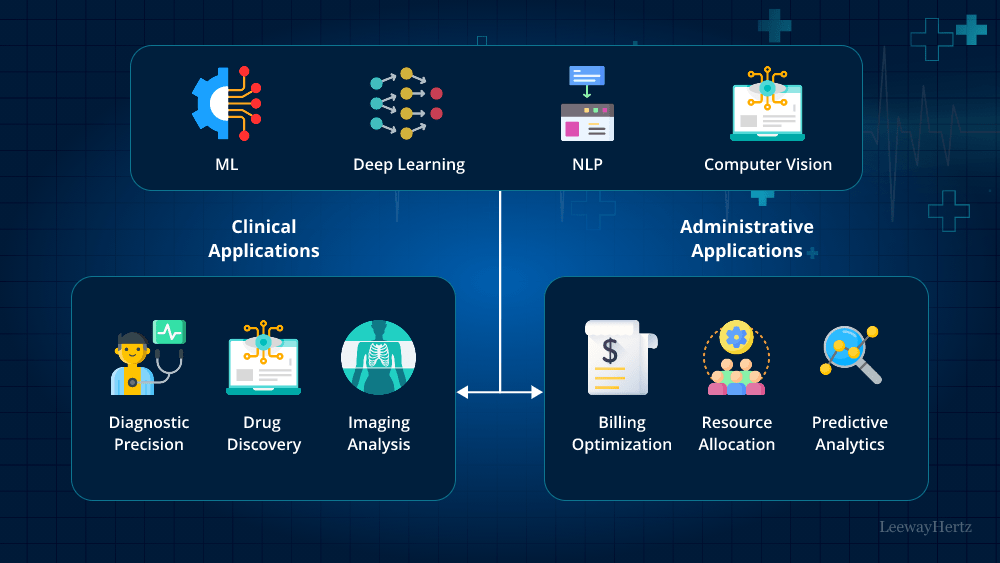
AI in healthcare refers to the use of advanced algorithms and software to analyze medical data, assist in clinical decision-making, and automate tasks traditionally performed by healthcare professionals. By harnessing vast amounts of data, AI systems can learn and adapt, leading to improved healthcare outcomes. The technology includes machine learning, natural language processing, and computer vision, each contributing to a more efficient healthcare system.
Enhancing Diagnostics
One of the primary benefits of AI in healthcare is its ability to enhance diagnostic capabilities. Traditional diagnostic processes can be time-consuming and prone to human error. AI algorithms can analyze medical images, such as X-rays, MRIs, and CT scans, with remarkable accuracy. By identifying patterns that may not be visible to the human eye, AI can assist radiologists in detecting diseases like cancer at earlier stages. This early detection can lead to better treatment outcomes and higher survival rates.
Personalized Medicine
Personalized medicine is another area where AI in healthcare is making a significant impact. By analyzing genetic information and other relevant data, AI can help healthcare providers tailor treatments to individual patients. This approach not only improves the effectiveness of treatments but also minimizes adverse reactions by selecting the most appropriate interventions for each patient. The use of AI in genomics and patient data analysis is paving the way for more targeted therapies that address the unique needs of patients.
Predictive Analytics
AI in healthcare is also transforming how providers predict patient outcomes. By utilizing predictive analytics, healthcare professionals can identify patients at risk of developing certain conditions based on historical data and lifestyle factors. For example, algorithms can analyze data from electronic health records (EHRs) to forecast hospital readmission rates or the likelihood of developing chronic diseases such as diabetes or heart disease. This proactive approach allows for early interventions, ultimately improving patient care and reducing healthcare costs.
Operational Efficiency
Beyond clinical applications, AI in healthcare is streamlining administrative tasks and enhancing operational efficiency. Automation of routine processes, such as appointment scheduling, billing, and patient follow-ups, reduces the burden on healthcare staff and minimizes human error. AI-driven chatbots are being used to provide immediate responses to patient inquiries, improving patient engagement and satisfaction. By freeing up time for healthcare professionals, AI allows them to focus more on patient care and complex decision-making.
Drug Discovery and Development
The drug discovery process is notoriously lengthy and expensive. However, AI in healthcare is accelerating this process by predicting how different compounds will interact with biological targets. Machine learning models can analyze vast datasets to identify potential drug candidates, evaluate their efficacy, and streamline clinical trials. This not only shortens the time it takes to bring new medications to market but also reduces development costs. As a result, patients gain access to new treatments more quickly.
Ethical Considerations
Despite the numerous advantages of AI in healthcare, there are ethical considerations that must be addressed. The use of AI raises questions about data privacy, consent, and bias. Ensuring that AI algorithms are trained on diverse datasets is crucial to avoid perpetuating existing health disparities. Additionally, as AI systems take on more responsibilities in decision-making, the importance of transparency and accountability becomes paramount. Healthcare providers must navigate these ethical dilemmas while leveraging the benefits of AI technology.
Challenges to Implementation
Implementing AI in healthcare is not without challenges. One major hurdle is the integration of AI systems into existing healthcare infrastructures. Many healthcare providers still rely on outdated technologies, making it difficult to adopt AI solutions effectively. Additionally, there is a need for ongoing training and education for healthcare professionals to ensure they can utilize AI tools effectively. Overcoming these challenges requires collaboration among stakeholders, including policymakers, technology developers, and healthcare providers.
The Future of AI in Healthcare
The future of AI in healthcare holds tremendous promise. As technology continues to advance, AI applications will become more sophisticated, leading to even more significant improvements in patient care. Innovations such as wearable health devices and telemedicine platforms are likely to incorporate AI capabilities, providing real-time insights and personalized care solutions. Furthermore, the continuous evolution of AI algorithms will enhance predictive analytics, enabling healthcare professionals to make even more informed decisions.
Conclusion
AI in healthcare is transforming the landscape of medicine, offering numerous benefits that enhance patient care and improve operational efficiency. While challenges remain, the potential of AI to revolutionize diagnostics, personalize treatment, and streamline healthcare operations is undeniable. By addressing ethical concerns and overcoming implementation hurdles, the healthcare industry can fully harness the power of AI, leading to better outcomes for patients and a more efficient healthcare system overall. As we look to the future, the role of AI in healthcare is set to expand, shaping a new era of medical innovation and patient care.
 FinTech blogs
Leave a comment