Introduction
The rapid evolution of technology has reshaped how businesses approach marketing, with AI agents emerging as pivotal tools in modern strategies. These AI-powered tools enable companies to engage customers more effectively, optimize campaigns, and forecast trends with unprecedented precision. In product marketing, AI agents are redefining how companies interact with their audience, paving the way for more personalized, data-driven, and customer-centric approaches. This article explores how AI agents in product marketing are transforming the field and examines strategies for maximizing their potential.
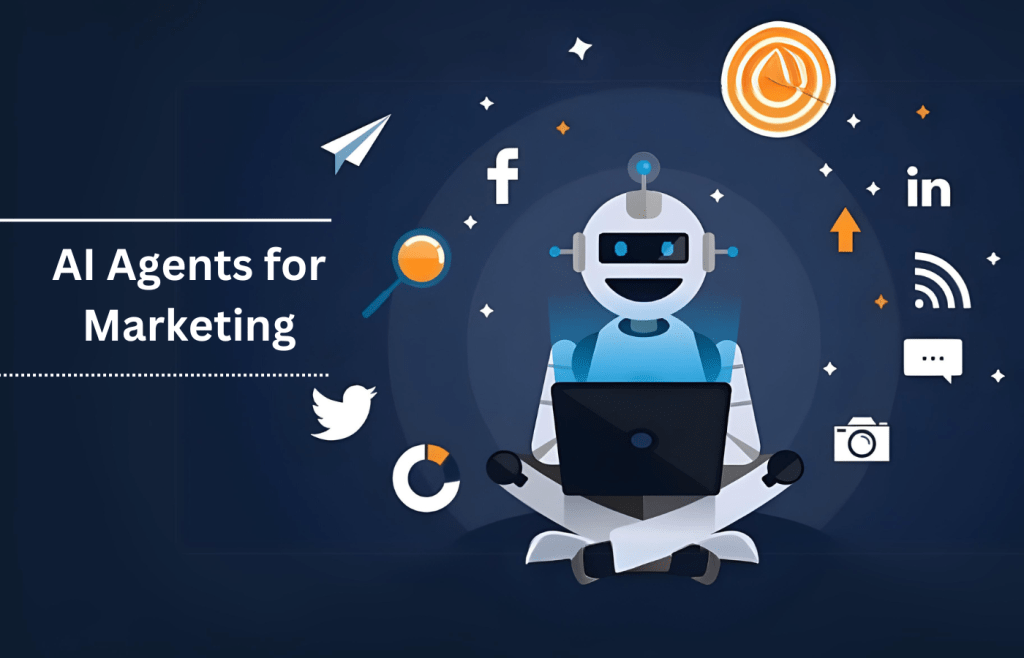
What are AI Agents in Product Marketing?
AI agents in product marketing refer to intelligent systems designed to execute and manage marketing tasks autonomously. Powered by advanced algorithms, these agents can gather and analyze data, automate interactions, and provide insights that drive decision-making. By simulating human-like thinking and processing, AI agents assist marketers in refining product promotion, targeting specific audience segments, and optimizing customer experiences. Unlike traditional methods, which rely on manual data analysis and general segmentation, AI agents enable businesses to take a more granular approach to marketing, thereby enhancing accuracy and effectiveness.
Benefits of Using AI Agents in Product Marketing
AI agents in product marketing offer several significant benefits that enhance marketing outcomes and operational efficiency. Let’s explore some of the key advantages.
1. Enhanced Customer Insights
One of the most substantial contributions of AI agents in product marketing is their ability to analyze vast amounts of customer data. By leveraging machine learning algorithms, these agents can identify patterns and predict behaviors with remarkable precision. This allows marketers to gain deep insights into customer preferences, needs, and purchasing habits. For instance, AI agents can evaluate previous purchase history, browsing patterns, and feedback, enabling personalized recommendations that resonate with individual customers. These insights support more effective segmentation and targeting, helping businesses reach the right customers at the right time.
2. Improved Personalization
Personalization is a cornerstone of modern marketing, and AI agents in product marketing significantly advance this goal. AI-powered systems can deliver highly customized messages and content tailored to each customer’s profile. With AI agents, companies can analyze customer data in real time to adjust content and messaging based on individual preferences. This level of personalization enhances engagement, as customers are more likely to respond positively to messages that align with their needs and interests. Moreover, it fosters loyalty by creating a unique and memorable customer experience.
3. Increased Efficiency through Automation
Automation is another crucial advantage of implementing AI agents in product marketing. By automating repetitive tasks such as email marketing, social media updates, and customer service responses, AI agents free up human resources to focus on strategic planning and creative initiatives. Automation also ensures that marketing campaigns are timely and consistent, as AI agents can operate 24/7 without fatigue. This efficiency leads to faster campaign execution, enabling businesses to adapt to market changes swiftly and maintain a competitive edge.
4. Predictive Analysis for Better Forecasting
AI agents in product marketing leverage predictive analysis to anticipate trends and customer behaviors. By evaluating historical data, market trends, and customer interactions, these agents can make accurate predictions about future buying patterns. This forecasting ability empowers businesses to proactively adjust their strategies, whether it’s planning inventory, refining product features, or timing promotions. Predictive analysis enables data-driven decision-making, reducing guesswork and enhancing the overall effectiveness of marketing campaigns.
Key Applications of AI Agents in Product Marketing
AI agents in product marketing can be applied across various aspects of the marketing process, from customer engagement to performance tracking. Here are some notable applications.
1. Customer Service and Chatbots
AI-powered chatbots have become integral to customer service in product marketing. These bots handle inquiries, assist customers in finding products, and provide recommendations based on browsing history or preferences. As a result, businesses can maintain consistent and reliable customer support around the clock, improving customer satisfaction and loyalty. Additionally, chatbots equipped with natural language processing (NLP) capabilities can interact conversationally, creating a more personalized and engaging experience for users.
2. Content Creation and Curation
AI agents in product marketing can assist with content creation and curation by analyzing trending topics, customer interests, and product-related keywords. By leveraging these insights, AI systems can suggest or even generate content that aligns with customer preferences, ensuring that marketing materials remain relevant and appealing. For instance, AI-powered content curation tools can help marketers identify popular topics within their niche, allowing them to create blog posts, social media updates, and newsletters that resonate with their audience.
3. Dynamic Pricing
AI agents in product marketing can also play a vital role in dynamic pricing strategies. By analyzing market trends, competitor pricing, and customer willingness to pay, AI systems can recommend optimal price points that maximize revenue without alienating customers. This adaptability is particularly beneficial in e-commerce, where pricing fluctuations are common, and AI agents can help businesses stay competitive while meeting profit targets.
Challenges and Considerations for Implementing AI Agents in Product Marketing
While AI agents in product marketing offer substantial advantages, there are challenges to consider.
1. Data Privacy Concerns
As AI agents rely heavily on data, there are privacy concerns regarding the collection and use of customer information. Companies must ensure compliance with data protection regulations, such as GDPR and CCPA, to maintain customer trust. Adopting secure data management practices is essential to balance data usage with privacy considerations.
2. High Implementation Costs
Implementing AI agents in product marketing can involve significant initial investments. From purchasing software to training staff, the costs can be considerable, especially for smaller businesses. However, businesses should weigh these costs against the potential long-term benefits, as AI-driven efficiency and insights often lead to a favorable return on investment.
3. Need for Continuous Monitoring and Optimization
AI agents require regular monitoring and optimization to remain effective. Without continuous oversight, these systems may produce biased or outdated results, which can negatively impact marketing campaigns. Businesses must allocate resources for ongoing maintenance and improvements to keep AI agents aligned with current trends and market dynamics.
Future of AI Agents in Product Marketing
The role of AI agents in product marketing will continue to grow as technology advances. With developments in machine learning and natural language processing, AI agents will become increasingly sophisticated, capable of handling more complex tasks with minimal human intervention. The future likely holds more intelligent AI agents that can autonomously manage entire campaigns, from content creation to customer engagement, further streamlining the marketing process. As companies integrate AI agents into their marketing strategies, those that adapt early will have a significant advantage in an increasingly competitive landscape.
Conclusion
AI agents in product marketing are transforming the way businesses engage with their customers, optimize campaigns, and stay ahead of trends. By providing enhanced insights, enabling personalized experiences, and automating repetitive tasks, AI agents allow marketers to operate more effectively and efficiently. Despite challenges such as data privacy and implementation costs, the benefits of AI agents far outweigh these obstacles. As technology progresses, companies that embrace AI agents in their marketing strategies are well-positioned for long-term success in an ever-evolving digital marketplace.
 FinTech blogs
Leave a comment