Introduction: Understanding AI Agents in Content Creation
The digital world has evolved rapidly, and with it, the demand for high-quality content has skyrocketed. To meet this need, many creators, marketers, and businesses are turning to AI agents in content creation. These intelligent systems have transformed the way content is produced, making it more efficient, scalable, and personalized. But what exactly are AI agents, and how do they play a crucial role in shaping the future of content creation?
What Are AI Agents?
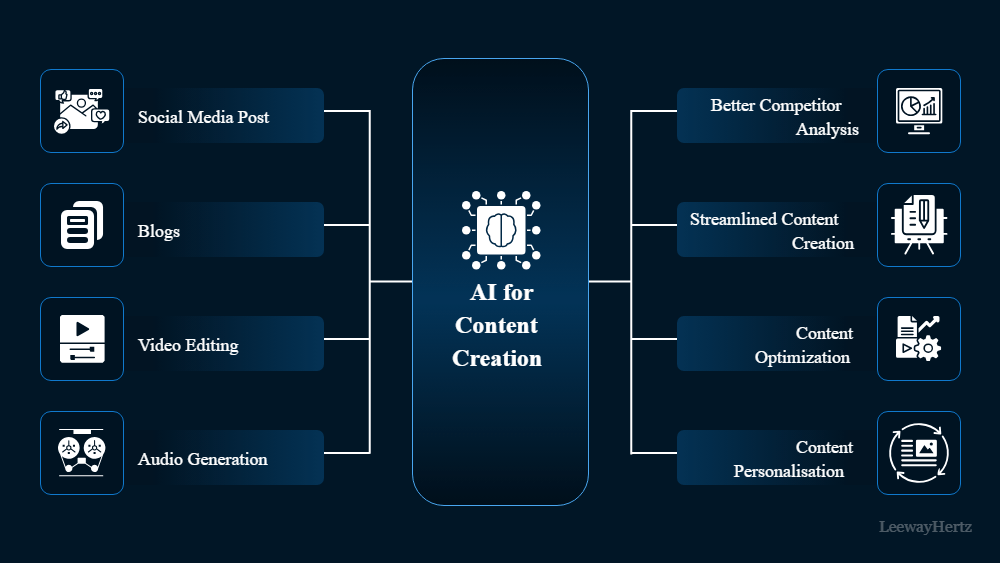
AI agents refer to autonomous or semi-autonomous systems designed to perform tasks that typically require human intelligence. These agents can analyze data, generate responses, and make decisions based on programmed algorithms or machine learning models. In the context of content creation, AI agents are used to write, edit, design, and optimize content for websites, blogs, social media, and more. They have the ability to understand language, predict audience behavior, and even tailor content to suit specific preferences.
How AI Agents Are Shaping Content Creation
AI agents in content creation have the potential to revolutionize the industry in several ways. From streamlining workflows to enhancing creativity, here’s a closer look at their impact.
- Increased Efficiency and Speed
Traditionally, content creation was a time-consuming process. Writers, editors, and designers spent hours drafting, revising, and finalizing content. With the help of AI agents in content creation, this process has been expedited. These tools can generate articles, social media posts, and even marketing copy in a fraction of the time it would take a human. Whether it’s drafting a 500-word blog post or curating an email campaign, AI-powered systems can automate many aspects of the content creation process.
- Personalization at Scale
In today’s digital landscape, personalization is key to engaging audiences. AI agents in content creation can analyze vast amounts of data to tailor content to specific audience segments. For instance, AI can identify a reader’s preferences based on their previous interactions, enabling creators to deliver more relevant content. This level of personalization ensures that content resonates with each individual, improving engagement and conversion rates.
- Enhanced Creativity and Idea Generation
Contrary to popular belief, AI agents in content creation do not replace human creativity. Instead, they serve as powerful tools that augment the creative process. By analyzing trends, keywords, and audience behavior, AI agents can help content creators generate fresh ideas, suggest topics, and even propose angles for articles. With AI doing the heavy lifting of data analysis, creators can focus more on refining their ideas and producing high-quality content.
- Cost-Effectiveness
Hiring a team of writers, editors, and designers can be expensive. For small businesses or startups, outsourcing content creation might not always be financially viable. This is where AI agents in content creation come into play. These tools offer a cost-effective alternative, reducing the need for a large team while maintaining high content quality. With AI handling tasks like writing, proofreading, and design, businesses can save both time and money.
- SEO Optimization and Keyword Integration
Search engine optimization (SEO) is a crucial component of content creation. Without proper SEO, even the best content may struggle to rank on search engines. AI agents in content creation are designed to incorporate SEO strategies automatically. From identifying the best keywords to optimizing content for readability and engagement, AI-powered tools ensure that content is search engine-friendly. They can also analyze top-performing content, helping creators understand what works and what doesn’t in their niche.
The Future of AI Agents in Content Creation
As AI technology continues to evolve, the potential for AI agents in content creation will only expand. Here are some emerging trends and possibilities for the future:
- Integration with Other Technologies
In the coming years, AI agents will likely integrate more seamlessly with other technologies, such as augmented reality (AR), virtual reality (VR), and voice assistants. This integration will allow content creators to design immersive experiences that are personalized, interactive, and engaging. AI agents could help generate content specifically tailored for these platforms, expanding the scope of content creation beyond traditional text and images.
- Improved Emotional Intelligence
One of the most exciting areas of development for AI agents is emotional intelligence. AI is already capable of recognizing language patterns, but in the future, it may be able to understand and replicate human emotions more accurately. This could lead to content that is even more personalized, empathetic, and emotionally resonant with the audience.
- Collaboration Between AI and Humans
While AI agents in content creation are powerful tools, they are unlikely to fully replace human creators. Instead, the future will likely see a more collaborative approach, where AI works alongside humans to enhance creativity, speed, and efficiency. For instance, AI might suggest headlines, suggest keywords, or generate initial drafts, while human creators refine the content, ensuring it aligns with the brand’s voice and values.
Challenges and Considerations
Despite the many advantages, there are also challenges associated with the use of AI agents in content creation. One of the main concerns is the potential for content to feel impersonal or formulaic. While AI can generate vast amounts of content quickly, it lacks the human touch that often resonates with readers. Additionally, there are ethical considerations regarding AI-generated content, such as ensuring transparency and avoiding plagiarism.
Conclusion: Embracing the Future of Content Creation
The rise of AI agents in content creation is a game-changer for the digital landscape. By improving efficiency, enabling personalization, and enhancing creativity, AI is helping businesses and creators meet the growing demand for high-quality content. While challenges remain, the potential for AI to reshape content creation is vast. As these agents continue to evolve, they will undoubtedly play an even greater role in the future of digital marketing and content production.
 FinTech blogs
Leave a comment