Introduction
Enterprise knowledge has traditionally been locked away in documents, databases, and siloed systems. While many organizations invested in knowledge repositories, few succeeded in making knowledge truly accessible and actionable. Today, that paradigm is shifting.
Advances in artificial intelligence, automation, and search technologies are redefining Enterprise Knowledge Management, transforming how organizations capture, discover, and apply information. At the center of this evolution lies modern Company Knowledge Base Management powered by intelligent Enterprise Search Solutions.
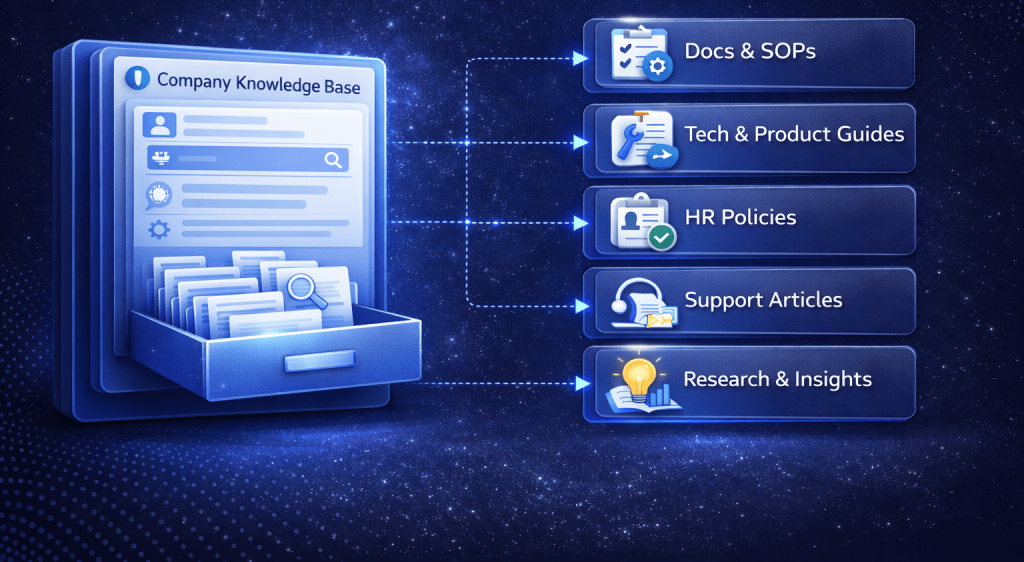
From Static Repositories to Intelligent Knowledge Ecosystems
Early knowledge bases functioned as static libraries—useful, but limited. Users needed to know where to look and how information was structured. As enterprises grew, this model failed to scale.
Modern knowledge ecosystems are:
- Dynamic and continuously updated
- Context-aware and personalized
- Integrated across enterprise platforms
- Designed around user intent rather than file structures
This shift reflects a broader understanding that knowledge management is not just about storage—it is about accessibility and usability.
AI and Automation in Knowledge Base Management
Artificial intelligence is fundamentally changing how company knowledge bases operate. AI-powered systems can now:
- Automatically tag and categorize content
- Detect duplicate or outdated information
- Recommend relevant knowledge based on user behavior
- Surface insights across structured and unstructured data
These capabilities reduce the manual effort required to maintain large knowledge bases while improving accuracy and relevance.
For enterprises managing thousands—or millions—of documents, AI-driven Company Knowledge Base Management is no longer a future concept; it is a necessity.
The Evolution of Enterprise Search Solutions
Enterprise search has evolved from simple indexing tools to intelligent discovery platforms. Modern Enterprise Search Solutions leverage:
- Natural language processing (NLP)
- Semantic understanding of content
- Machine learning relevance models
- Federated search across systems
Employees can now ask questions in plain language and receive contextually relevant answers—regardless of where the information is stored.
This dramatically improves knowledge adoption and reduces friction between employees and information.
Breaking Down Information Silos
One of the biggest challenges in Enterprise Knowledge Management is fragmentation. Knowledge often lives across multiple systems:
- Document management platforms
- Collaboration tools
- CRM and ERP systems
- Support and ticketing platforms
Modern knowledge management strategies prioritize integration. Rather than forcing users to search multiple tools, enterprises unify access through centralized search and federated knowledge bases.
This approach transforms knowledge from a departmental asset into an organizational one.
The Future of Enterprise Knowledge Management
Looking ahead, Enterprise Knowledge Management will continue to evolve toward:
- Conversational AI and virtual knowledge assistants
- Predictive knowledge delivery based on context
- Real-time content validation and updates
- Deeper analytics on knowledge usage and gaps
Organizations that embrace this evolution will move beyond managing knowledge to actively leveraging it as a driver of innovation and performance.
Conclusion
Enterprise Knowledge Management is entering a new era—one defined by intelligence, integration, and accessibility. Modern Company Knowledge Base Management, supported by advanced Enterprise Search Solutions, enables organizations to unlock the full value of their information assets.
As enterprises navigate increasing complexity, those that treat knowledge as a strategic capability—not just a repository—will be best positioned to adapt, compete, and grow.
 FinTech blogs
Leave a comment