Introduction
Predictive maintenance is revolutionizing industries by preempting equipment failures and reducing downtime. Central to this transformation is Artificial Intelligence (AI). This article delves into how AI in predictive maintenance is enhancing operational efficiency, cutting costs, and fostering innovation across various sectors.
What is Predictive Maintenance?
Predictive maintenance is a proactive approach that uses data analysis tools to predict when equipment failures might occur. This allows for timely maintenance, preventing unexpected breakdowns and extending the lifespan of machinery. Traditional maintenance strategies—reactive and preventive—either wait for equipment to fail or maintain it at scheduled intervals, often leading to unnecessary costs or unexpected downtimes.
The Role of AI in Predictive Maintenance
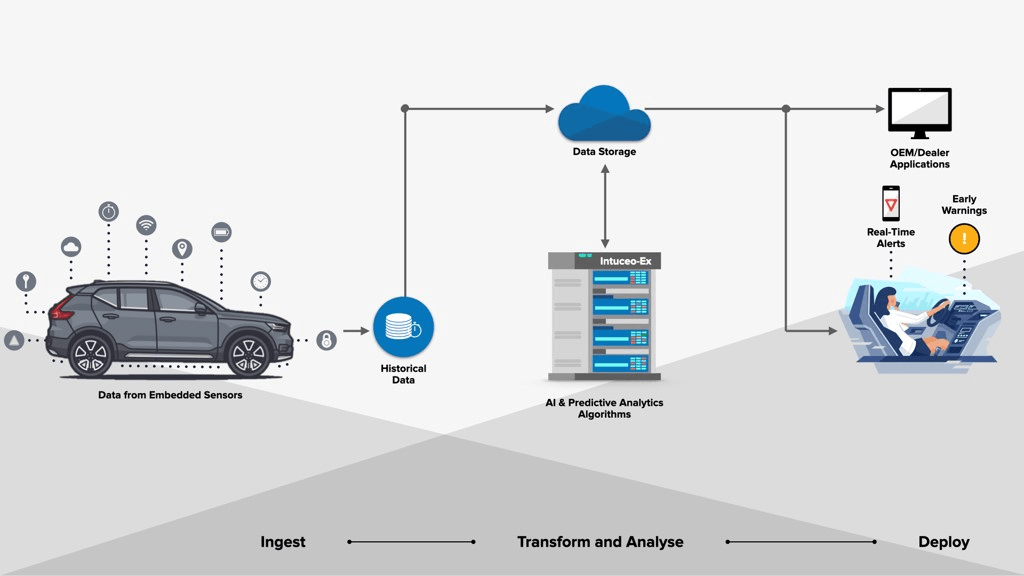
AI in predictive maintenance involves using machine learning algorithms and data analytics to forecast equipment failures. By analyzing data from various sensors embedded in machinery, AI can identify patterns and anomalies that might indicate potential issues. Here’s how AI enhances predictive maintenance:
- Data Collection and Analysis
- AI systems collect vast amounts of data from machinery, including temperature, vibration, sound, and other operational parameters.
- Machine learning algorithms analyze this data to identify normal and abnormal patterns, predicting when a failure is likely to occur.
- Real-time Monitoring
- AI enables continuous real-time monitoring of equipment, providing instant alerts if any parameter deviates from the norm.
- This ensures that maintenance teams can act immediately, reducing the risk of significant damage.
- Improved Accuracy and Efficiency
- AI algorithms improve over time, enhancing their predictive accuracy.
- This leads to more precise maintenance schedules, reducing unnecessary maintenance actions and optimizing resource allocation.
Benefits of AI in Predictive Maintenance
Implementing AI in predictive maintenance offers numerous benefits, including:
- Reduced Downtime
- By predicting failures before they happen, AI helps in scheduling maintenance activities without interrupting production processes.
- This minimizes downtime, ensuring that operations run smoothly and efficiently.
- Cost Savings
- Preventing unexpected equipment failures saves costs associated with emergency repairs and production halts.
- Optimized maintenance schedules reduce labor and parts costs, enhancing overall cost efficiency.
- Extended Equipment Lifespan
- Timely maintenance based on accurate predictions prevents excessive wear and tear.
- This extends the lifespan of machinery, maximizing the return on investment for equipment.
- Enhanced Safety
- Predictive maintenance reduces the risk of catastrophic failures, ensuring a safer working environment.
- Early detection of issues helps in mitigating potential hazards, protecting both personnel and equipment.
Applications Across Industries
AI in predictive maintenance is applicable across various industries, each benefiting uniquely from this technology:
- Manufacturing
- In manufacturing, AI helps maintain production lines by predicting failures in critical components like motors, conveyors, and robotic arms.
- This ensures continuous production and reduces the risk of costly downtime.
- Energy
- The energy sector uses AI to monitor and maintain equipment like turbines, generators, and transformers.
- Predictive maintenance in this sector ensures a stable and uninterrupted power supply, essential for economic stability.
- Aviation
- AI in aviation helps in maintaining aircraft by predicting failures in engines, landing gear, and avionics.
- This enhances flight safety, reduces maintenance costs, and improves on-time performance.
- Transportation
- In the transportation sector, AI monitors the health of vehicles, predicting failures in engines, brakes, and transmission systems.
- This ensures fleet reliability and reduces downtime, crucial for logistics and public transportation.
Challenges and Future Outlook
Despite its benefits, implementing AI in predictive maintenance poses challenges:
- Data Quality and Quantity
- Effective predictive maintenance requires high-quality, extensive datasets.
- Collecting and managing this data can be challenging, especially in older machinery lacking modern sensors.
- Integration with Existing Systems
- Integrating AI solutions with existing maintenance systems and workflows can be complex.
- This often requires significant investment in technology and training.
- Cybersecurity Concerns
- Increased connectivity and data exchange raise concerns about cybersecurity.
- Protecting sensitive data and ensuring system integrity is crucial for reliable predictive maintenance.
Conclusion
AI in predictive maintenance is a game-changer, providing unparalleled insights into equipment health and performance. By leveraging AI, industries can significantly reduce downtime, cut costs, and enhance safety. As technology continues to advance, AI-powered predictive maintenance will become increasingly sophisticated, further transforming the landscape of industrial operations. Embracing this technology is not just a competitive advantage but a necessity for modern, efficient, and resilient operations.


Leave a comment