In today’s rapidly evolving technological landscape, Generative AI is emerging as a transformative force for businesses. Enterprises across various sectors are increasingly leveraging AI application development services to enhance their operations and innovate their offerings. This article explores the core components of Generative AI architecture and how it benefits enterprises by optimizing efficiency, driving innovation, and unlocking new opportunities.
Understanding Generative AI Architecture
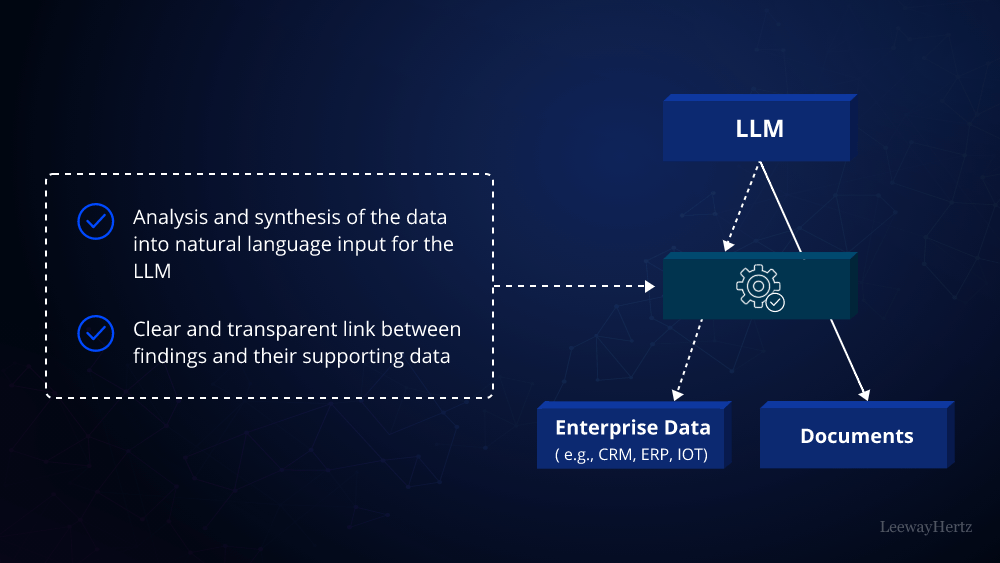
Generative AI refers to a class of artificial intelligence techniques designed to create new content or data that mirrors existing examples. The architecture behind these systems is crucial for their functionality and effectiveness. At its core, Generative AI architecture involves complex models that learn from vast amounts of data to generate new and meaningful outputs. This includes generating text, images, music, or even complex simulations.
Key components of Generative AI architecture include:
- Neural Networks: Central to Generative AI are deep neural networks, particularly Generative Adversarial Networks (GANs) and Variational Autoencoders (VAEs). GANs consist of two neural networks—a generator and a discriminator—that work in tandem to create realistic outputs. VAEs, on the other hand, are designed to encode input data into a compressed form and then decode it to produce new, similar data.
- Training Data: The quality and diversity of the training data significantly impact the performance of Generative AI models. Enterprises need to ensure that their data is comprehensive and representative of the desired outputs to achieve optimal results.
- Model Architecture: The architecture of the model—how the neural networks are structured and interact—plays a critical role in determining the effectiveness of Generative AI. Advances in model architecture, such as transformers and attention mechanisms, have greatly enhanced the capabilities of Generative AI.
- Compute Resources: Training Generative AI models requires substantial computational power. Enterprises often utilize cloud computing resources or high-performance computing infrastructure to handle these demands efficiently.
Benefits of Generative AI for Enterprises
Integrating Generative AI into business operations offers numerous benefits, including:
- Enhanced Creativity and Innovation: Generative AI can produce novel ideas and solutions that might not be immediately apparent to human teams. For example, it can help design new products, create marketing content, or develop unique customer experiences.
- Cost Efficiency: By automating content generation and data synthesis, Generative AI can reduce the need for manual labor and minimize errors, leading to cost savings. This efficiency is particularly valuable in industries like advertising, where rapid content creation is crucial.
- Personalization: Generative AI enables highly personalized experiences for customers by analyzing their preferences and generating tailored recommendations. This can improve customer satisfaction and drive engagement across various touchpoints.
- Accelerated Development Cycles: AI application development services can significantly speed up the process of creating and deploying new applications. Generative AI helps streamline development by automating tasks such as code generation, data processing, and testing.
Implementing Generative AI in Enterprise Applications
For enterprises looking to integrate Generative AI into their operations, several steps can facilitate a successful implementation:
- Define Objectives: Clearly outline what you aim to achieve with Generative AI. Whether it’s enhancing customer interactions, optimizing internal processes, or driving innovation, having well-defined objectives will guide the development and deployment process.
- Choose the Right AI Application Development Services: Partner with experienced AI application development service providers who understand your industry and can tailor solutions to meet your specific needs. Their expertise will be invaluable in designing, developing, and deploying Generative AI models.
- Invest in Data and Infrastructure: Ensure that you have access to high-quality data and robust computing resources. Investing in these areas will enhance the performance of your Generative AI models and ensure they deliver valuable results.
- Monitor and Evaluate Performance: Continuously monitor the performance of your Generative AI systems and assess their impact on your business objectives. Regular evaluations will help you identify areas for improvement and make necessary adjustments.
- Ensure Ethical Use: Generative AI comes with ethical considerations, including issues related to data privacy and content authenticity. Implement guidelines and practices to address these concerns and ensure responsible use of AI technology.
Conclusion
Generative AI architecture holds immense potential for enterprises seeking to innovate and optimize their operations. By leveraging advanced neural networks, high-quality data, and powerful computing resources, businesses can harness the benefits of Generative AI to drive creativity, efficiency, and personalization. Partnering with proficient AI application development services is key to successfully implementing and scaling Generative AI solutions. As enterprises continue to embrace this technology, they unlock new possibilities and gain a competitive edge in the ever-evolving market landscape.


Leave a comment