In today’s fast-paced business environment, companies are increasingly turning to technology to gain a competitive edge. One of the most transformative technologies currently shaping various industries is Artificial Intelligence (AI). Among its many applications, AI in inventory management stands out as a game-changer, offering unprecedented levels of efficiency, accuracy, and cost savings. This article explores the impact of AI in inventory management, highlighting how it is revolutionizing traditional practices and setting new standards for operational excellence.
The Role of AI in Inventory Management
Inventory management is a critical aspect of any business that deals with physical goods. Traditionally, this process has involved manual tracking, forecasting based on historical data, and routine stock checks. While these methods have served businesses well in the past, they are not without their limitations. Errors in stock levels, inaccurate demand forecasting, and inefficiencies in order management can lead to significant financial losses.
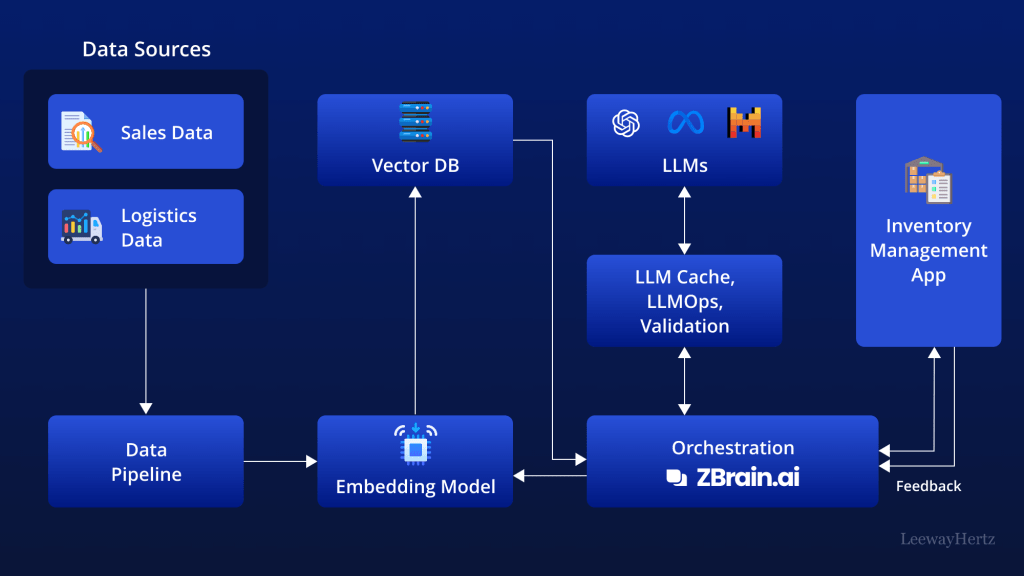
AI in inventory management addresses these challenges by automating and optimizing key processes. Through the use of machine learning algorithms, AI systems can analyze vast amounts of data, identify patterns, and make accurate predictions. This leads to more precise demand forecasting, reduced stockouts, and optimized inventory levels, ultimately improving the bottom line.
How AI Enhances Demand Forecasting
One of the most significant benefits of AI in inventory management is its ability to enhance demand forecasting. Traditional forecasting methods rely heavily on historical sales data and may not account for external factors such as market trends, seasonal fluctuations, or economic changes. This can result in overstocking or understocking, both of which are costly for businesses.
AI-driven demand forecasting, on the other hand, uses advanced algorithms to analyze not only historical data but also real-time information from various sources, such as social media, market reports, and customer behavior. By processing this data, AI can predict future demand with greater accuracy. Businesses can then adjust their inventory levels accordingly, reducing the risk of stockouts and excess inventory.
Optimizing Inventory Levels with AI
Maintaining the right balance of inventory is crucial for maximizing profitability. Holding too much inventory ties up capital and increases storage costs, while too little inventory can lead to missed sales opportunities and dissatisfied customers. AI in inventory management helps businesses strike the perfect balance by providing real-time insights into stock levels.
AI systems can monitor inventory in real time, identifying slow-moving items and predicting when stock will run out. This enables businesses to make informed decisions about when to reorder products and how much to order. Additionally, AI can automatically adjust reorder points based on current demand trends, ensuring that inventory levels are always optimized.
Improving Supply Chain Efficiency
The supply chain is the backbone of inventory management, and AI is playing a pivotal role in making it more efficient. AI-powered systems can analyze data across the entire supply chain, identifying bottlenecks and inefficiencies. By predicting potential disruptions, such as delays in shipping or changes in supplier performance, AI helps businesses mitigate risks and ensure a smooth flow of goods.
Moreover, AI in inventory management enables better coordination between different parts of the supply chain. For example, it can synchronize production schedules with inventory levels and customer orders, ensuring that goods are produced and delivered just in time. This not only reduces lead times but also minimizes waste and improves overall supply chain efficiency.
Enhancing Customer Satisfaction
Customer satisfaction is a key driver of business success, and AI in inventory management contributes to this in several ways. First, by ensuring that products are always in stock when customers need them, AI reduces the likelihood of stockouts, which can lead to lost sales and frustrated customers. Second, AI-powered systems can track customer preferences and purchase history, enabling businesses to offer personalized recommendations and promotions.
In addition, AI can optimize order fulfillment processes, ensuring that orders are processed quickly and accurately. This leads to faster delivery times and a better overall customer experience. In an era where customers expect instant gratification, AI helps businesses meet and exceed these expectations, fostering loyalty and repeat business.
Reducing Operational Costs
Another significant advantage of AI in inventory management is its ability to reduce operational costs. By automating routine tasks such as stock counting, order processing, and demand forecasting, AI frees up human resources to focus on more strategic activities. This not only improves efficiency but also reduces the likelihood of errors that can be costly to fix.
Furthermore, AI-powered systems can optimize storage space by analyzing inventory turnover rates and product dimensions. This allows businesses to make better use of their warehouse space, reducing storage costs. Additionally, by minimizing excess inventory and stockouts, AI helps businesses avoid the costs associated with overproduction and emergency reordering.
The Future of AI in Inventory Management
The future of AI in inventory management looks promising, with continued advancements expected to bring even more benefits to businesses. As AI technology evolves, we can anticipate more sophisticated algorithms that offer even greater accuracy in demand forecasting and inventory optimization. Additionally, the integration of AI with other emerging technologies, such as the Internet of Things (IoT) and blockchain, will further enhance supply chain visibility and security.
In conclusion, AI in inventory management is not just a trend but a necessity for businesses that want to remain competitive in today’s dynamic market. By leveraging AI, companies can achieve greater efficiency, reduce costs, and enhance customer satisfaction, all while maintaining optimal inventory levels. As more businesses adopt AI-driven inventory management solutions, the industry will continue to evolve, setting new standards for excellence.


Leave a comment