Introduction: The Rise of AI in Information Technology
Artificial Intelligence (AI) is revolutionizing various sectors, with information technology (IT) being one of the most profoundly affected fields. The integration of AI in information technology is reshaping how businesses operate, enhancing efficiency, and driving innovation. This article delves into the role of AI in information technology, exploring its applications, benefits, and future potential.
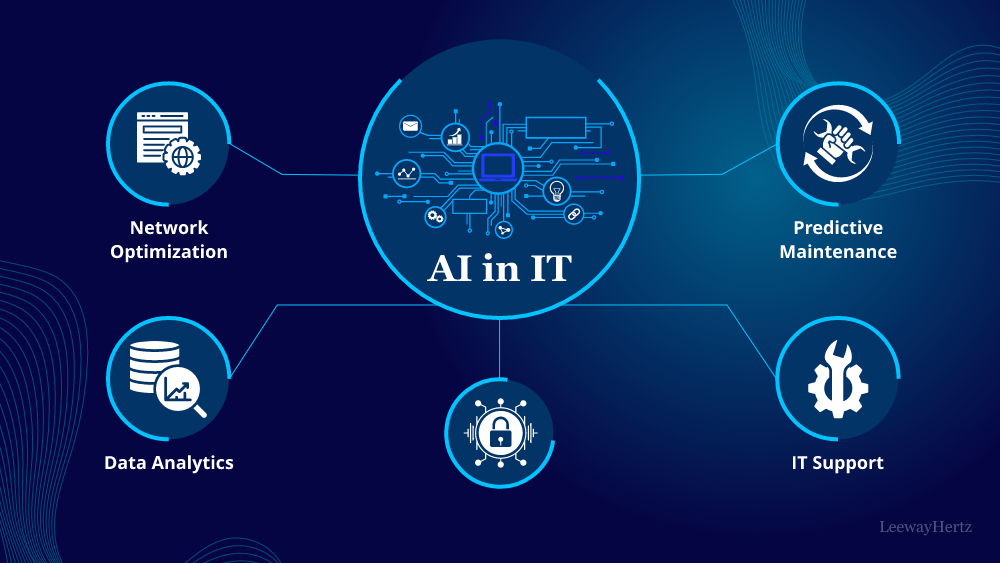
AI in Information Technology: Enhancing Efficiency and Automation
One of the most significant impacts of AI in information technology is its ability to streamline and automate processes. Traditionally, IT operations involved numerous manual tasks, from data entry to system monitoring. With AI, many of these tasks can now be automated, reducing the need for human intervention and minimizing errors.
AI-driven automation tools can handle repetitive tasks such as software updates, system backups, and network management. This not only speeds up these processes but also allows IT professionals to focus on more strategic activities. For instance, AI-powered chatbots can provide instant support to users, addressing common queries and issues without human involvement.
Data Management and Analytics: Leveraging AI for Better Insights
Data is a crucial asset in information technology, and AI is transforming how organizations manage and analyze this data. AI in information technology enables advanced data analytics, providing deeper insights and more accurate predictions. Machine learning algorithms can analyze vast amounts of data to identify patterns and trends that might not be apparent through traditional methods.
For example, AI can help IT departments detect potential security threats by analyzing network traffic patterns and identifying anomalies. This proactive approach enhances cybersecurity measures and reduces the risk of data breaches. Additionally, AI can assist in optimizing system performance by analyzing usage patterns and recommending adjustments to improve efficiency.
AI in IT Security: Strengthening Cyber Defenses
Cybersecurity is a critical concern for information technology, and AI plays a pivotal role in enhancing security measures. AI algorithms can detect and respond to potential threats more rapidly than human counterparts. Machine learning models can be trained to recognize the signatures of known cyberattacks and identify new, previously unknown threats.
AI-powered security solutions can analyze large volumes of data in real-time, enabling faster detection of suspicious activities. For instance, AI can monitor network traffic for unusual behavior, such as a sudden spike in data transfers, which may indicate a cyberattack. By automating threat detection and response, AI helps organizations stay ahead of potential security risks.
AI and IT Support: Revolutionizing Customer Service
AI is also transforming IT support services, improving the efficiency and effectiveness of customer service. AI-driven support systems, such as virtual assistants and chatbots, can handle a wide range of user queries and technical issues. These systems are available 24/7, providing immediate assistance and reducing the need for human support agents.
AI in information technology enables these support systems to learn from interactions and improve over time. Natural language processing (NLP) allows chatbots to understand and respond to user queries more accurately, while machine learning algorithms help refine their responses based on user feedback. This enhances the overall user experience and ensures timely resolution of issues.
The Future of AI in Information Technology: What Lies Ahead
The future of AI in information technology holds immense potential for further advancements and innovations. As AI technology continues to evolve, we can expect even more sophisticated applications and solutions. One area of interest is the integration of AI with other emerging technologies, such as the Internet of Things (IoT) and blockchain.
For instance, AI can enhance IoT systems by enabling smarter and more autonomous devices. In combination with blockchain, AI can improve data security and integrity by providing advanced encryption and verification methods. These developments will likely drive new opportunities and applications in information technology.
Moreover, the ethical implications of AI in IT will become increasingly important. As AI systems become more integrated into IT operations, addressing issues related to privacy, bias, and accountability will be crucial. Ensuring that AI technologies are used responsibly and transparently will be essential for maintaining trust and achieving positive outcomes.
Conclusion: Embracing the Benefits of AI in Information Technology
AI in information technology is undeniably transforming the landscape of the IT industry. From enhancing automation and data analytics to strengthening cybersecurity and improving customer support, AI is driving significant advancements and efficiencies. As technology continues to progress, the role of AI in information technology will only grow more critical, shaping the future of how we manage and interact with information systems.
Embracing AI in information technology offers numerous benefits, including increased efficiency, improved security, and enhanced user experiences. Organizations that leverage AI effectively will be better positioned to navigate the evolving IT landscape and stay ahead of the competition. The continued integration of AI in information technology promises a future of innovation and growth, making it an exciting area to watch in the years to come.


Leave a comment