Introduction
In the ever-evolving landscape of business, integrating technology has become essential for maintaining a competitive edge. One of the most transformative technologies is artificial intelligence (AI), which has begun to revolutionize various aspects of business management. The application of AI in business management is not only enhancing operational efficiency but also reshaping strategic planning and decision-making processes.
Enhancing Operational Efficiency with AI
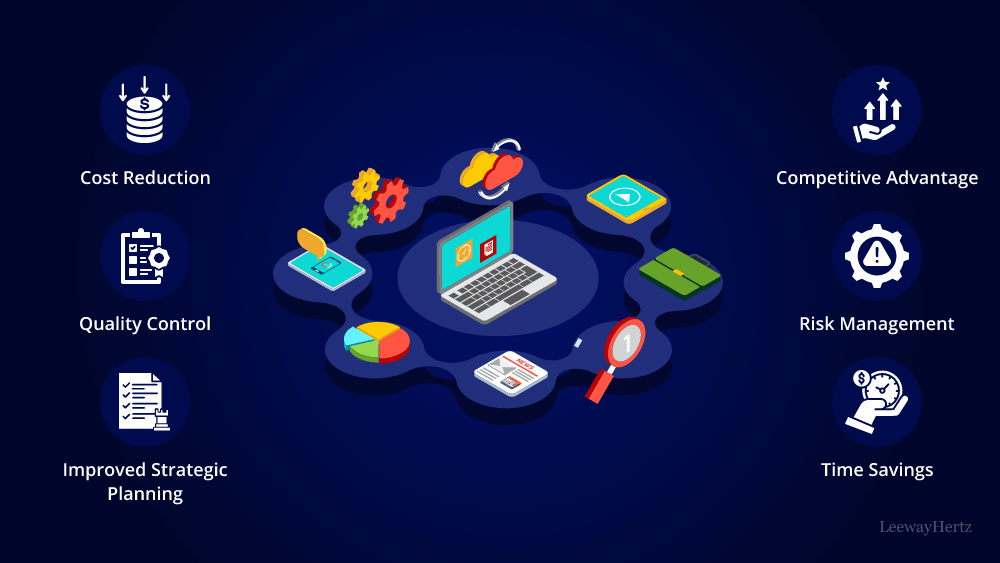
AI in business management is significantly improving operational efficiency. Automation is one of the key benefits, as AI technologies can handle repetitive and time-consuming tasks more quickly and accurately than human workers. For instance, AI-driven systems can manage inventory, process transactions, and handle customer inquiries with minimal human intervention. This leads to reduced operational costs and fewer errors, allowing businesses to allocate resources more effectively.
Predictive analytics, another aspect of AI in business management, enables companies to anticipate future trends and demands. By analyzing historical data and identifying patterns, AI can provide insights that help in forecasting sales, optimizing supply chains, and managing risks. This proactive approach not only improves efficiency but also enhances the ability to respond to market changes.
Improving Decision-Making with AI
AI in business management is transforming decision-making by providing data-driven insights. Traditional decision-making often relies on intuition and historical data, which can be limiting. AI, on the other hand, leverages advanced algorithms to analyze vast amounts of data quickly and accurately. This capability enables managers to make informed decisions based on real-time data and predictive models.
Machine learning, a subset of AI, enhances decision-making by continuously learning from new data. As AI systems process more information, they improve their accuracy and relevance, providing even more valuable insights over time. This dynamic learning process helps businesses adapt to changing conditions and make strategic decisions that are both timely and well-informed.
Personalizing Customer Experiences
Customer experience is a critical factor in business success, and AI is playing a pivotal role in personalizing interactions. AI in business management allows for the creation of tailored experiences based on individual customer preferences and behaviors. For example, AI-driven recommendation engines analyze customer data to suggest products or services that are most likely to meet their needs.
Chatbots and virtual assistants are another application of AI in customer service. These tools can engage with customers in real time, providing instant responses to inquiries and resolving issues efficiently. By leveraging AI, businesses can enhance customer satisfaction and loyalty while reducing the workload on human support teams.
Optimizing Marketing Strategies
AI is also making significant strides in optimizing marketing strategies. With AI in business management, companies can analyze customer data to identify trends and preferences, allowing for more targeted and effective marketing campaigns. Predictive analytics helps businesses understand which marketing tactics are likely to yield the best results, enabling them to allocate their marketing budgets more efficiently.
Furthermore, AI-driven tools can automate content creation and social media management, streamlining the process of engaging with customers online. By using AI to analyze engagement metrics and adjust strategies in real time, businesses can improve their online presence and achieve better marketing outcomes.
Enhancing Financial Management
Financial management is another area where AI in business management is making a significant impact. AI tools can automate financial processes such as budgeting, forecasting, and financial reporting. This automation reduces the risk of errors and provides more accurate and timely financial information.
AI-powered analytics can also offer insights into financial performance, helping businesses identify cost-saving opportunities and optimize investment strategies. By leveraging AI, companies can make more informed financial decisions and improve their overall financial health.
Facilitating Talent Management
AI in business management extends to human resources and talent management as well. AI-driven recruitment tools can streamline the hiring process by analyzing resumes, screening candidates, and identifying the best fits for job roles. This not only speeds up the recruitment process but also helps in finding candidates who are most likely to succeed in the organization.
Additionally, AI can assist in employee development by analyzing performance data and identifying areas for improvement. Personalized training and development programs can be designed based on individual needs, helping employees enhance their skills and contribute more effectively to the organization.
Conclusion
The integration of AI in business management is reshaping how companies operate and make strategic decisions. From enhancing operational efficiency and decision-making to personalizing customer experiences and optimizing marketing strategies, AI is proving to be a valuable asset across various aspects of business management. As AI technology continues to advance, its role in business management is likely to expand, offering even more opportunities for innovation and growth. Embracing AI is no longer just an option but a necessity for businesses aiming to thrive in today’s competitive environment.


Leave a comment