Introduction
In today’s rapidly evolving technological landscape, the concept of Enterprise AI development is becoming increasingly crucial for organizations striving for competitive advantage. The integration of advanced technologies, particularly Retrieval-Augmented Generation (RAG), offers a transformative approach to AI solutions. By leveraging RAG, enterprises can enhance their AI capabilities, streamline processes, and drive innovation.
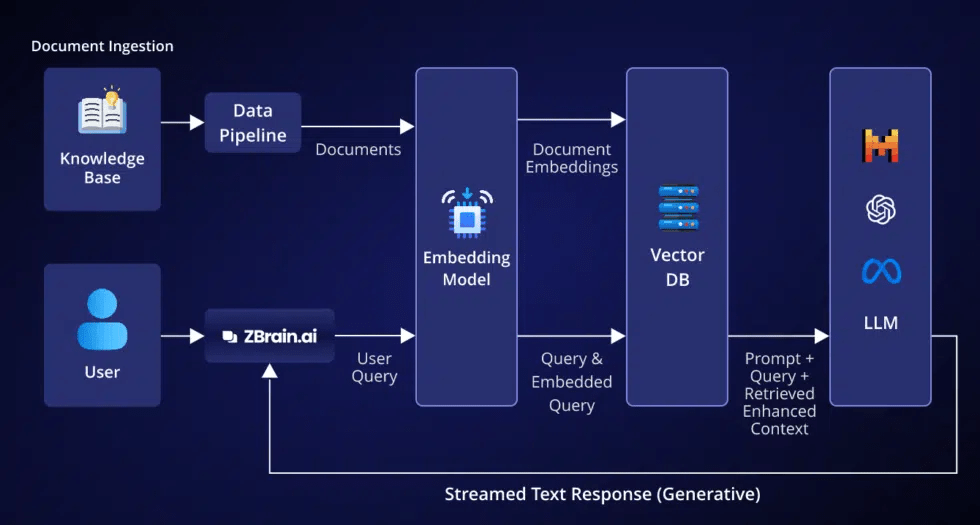
Understanding Retrieval-Augmented Generation
Retrieval-Augmented Generation combines the strengths of retrieval-based systems and generative models. This technique allows AI to access a vast database of information, retrieve relevant data, and generate insightful responses. Unlike traditional AI models that rely solely on pre-trained knowledge, RAG systems can dynamically access updated content, providing more accurate and contextually relevant outputs.
The Importance of Enterprise AI Development
Enterprise AI development focuses on creating AI solutions that address specific business needs. This includes automating repetitive tasks, enhancing decision-making, and improving customer interactions. As organizations strive to become more agile and data-driven, the demand for effective AI solutions continues to grow. RAG plays a pivotal role in this development by offering several advantages:
- Improved Accuracy: By integrating real-time data retrieval, RAG enhances the accuracy of generated responses. This is particularly important in sectors such as finance and healthcare, where precision is paramount.
- Contextual Relevance: RAG systems can pull contextually relevant information from extensive datasets, ensuring that generated content aligns with current business contexts and customer needs. This is vital for maintaining relevance in fast-paced industries.
- Enhanced User Experience: Utilizing RAG in Enterprise AI development can significantly improve user experience. By providing accurate and timely responses, businesses can enhance customer satisfaction and engagement.
Accelerating Development Cycles
One of the key benefits of incorporating Retrieval-Augmented Generation into Enterprise AI development is the acceleration of development cycles. Traditional AI models often require extensive training and fine-tuning, which can be time-consuming. However, RAG can significantly reduce these cycles by enabling rapid prototyping and iteration.
- Faster Prototyping: With RAG, developers can quickly test new ideas and generate prototypes using existing data. This enables teams to identify and address issues early in the development process.
- Agile Adaptation: The ability to access up-to-date information allows businesses to adapt their AI solutions to changing market conditions swiftly. This agility is essential for maintaining competitiveness in today’s fast-paced environment.
Use Cases of Retrieval-Augmented Generation in Enterprise AI Development
Various industries can benefit from the integration of RAG into their AI strategies. Here are a few illustrative use cases:
- Customer Support: By employing RAG, enterprises can enhance their customer support systems. AI chatbots can retrieve relevant knowledge base articles and generate responses tailored to specific customer queries, leading to faster and more accurate resolutions.
- Market Research: RAG can facilitate data analysis by retrieving the latest market trends and insights. Businesses can leverage this information to inform their strategies and make data-driven decisions.
- Content Creation: Enterprises focused on marketing can utilize RAG for content generation. By retrieving relevant information, AI can create engaging content that resonates with target audiences, enhancing brand visibility.
Challenges and Considerations
Despite the numerous benefits of RAG in Enterprise AI development, organizations must also be mindful of potential challenges. Data privacy and security are significant concerns, especially when dealing with sensitive information. Companies must ensure robust data governance practices to mitigate these risks.
Furthermore, the successful implementation of RAG requires a skilled workforce. Organizations should invest in training and development to equip their teams with the necessary skills to effectively utilize this technology.
Conclusion
In summary, Retrieval-Augmented Generation is a powerful tool for accelerating Enterprise AI development. By enhancing accuracy, contextual relevance, and user experience, RAG empowers organizations to stay competitive in a rapidly changing environment. As businesses continue to embrace AI, understanding and implementing RAG will be crucial for unlocking the full potential of Enterprise AI development.


Leave a comment